Person in the New Testament
Simon of Cyrene
Simon of Cyrene: the passer-by compelled to carry the cross
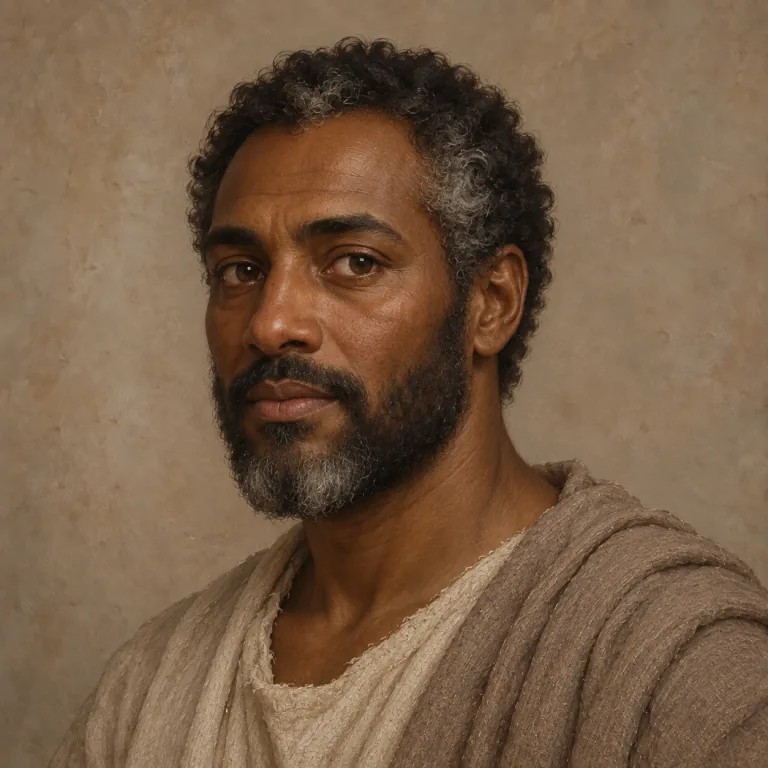
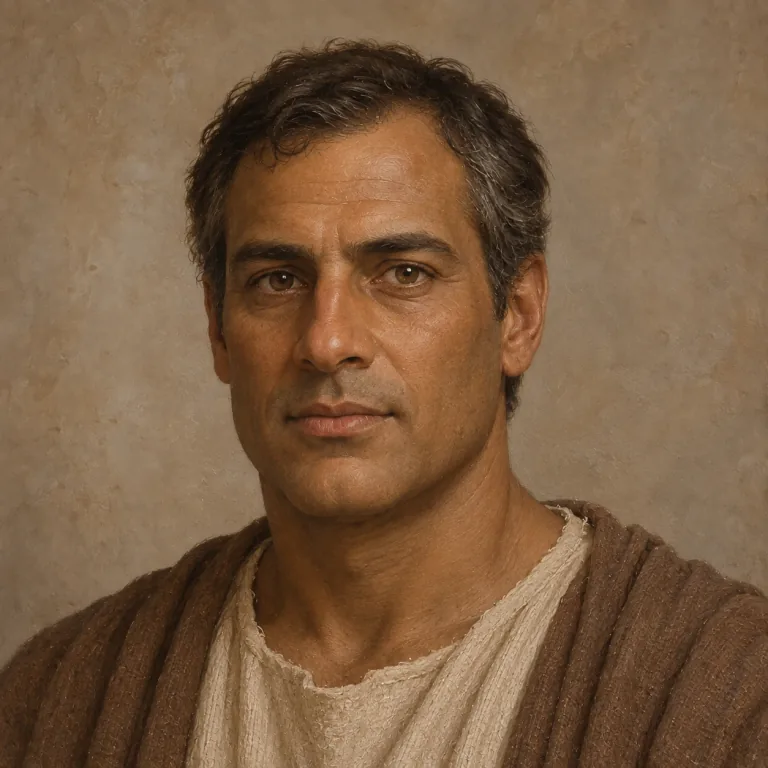
Portrait: an AI-generated artistic interpretation, not evidence of how Simon looked.
Who Simon is
Three verses hold everything the text says about him. Matthew says that as they came out they found a man of Cyrene, Simon by name, and him they compelled to bear his cross. Mark says they compel one Simon a Cyrenian, who passed by, coming out of the country, the father of Alexander and Rufus, to bear his cross. Luke says that as they led Jesus away they laid hold upon one Simon, a Cyrenian, coming out of the country, and on him they laid the cross, that he might bear it after Jesus. All three place him between the mocking by the soldiers and the arrival at the place of crucifixion. He speaks no recorded word, no reaction of his is reported, and none of the three books mentions him again.
Cited passages: Matthew 27:32, Mark 15:21, Luke 23:26
Historical setting
The three verses agree that he was of Cyrene, that he was taken rather than volunteering, and that he carried the cross. Matthew and Mark use the word compel; Luke says they laid hold upon him. Mark and Luke add that he was coming out of the country, and Mark alone among these three verses names two sons, Alexander and Rufus, about whom nothing further is said here. Luke adds the direction, that he might bear it after Jesus. The text gives no age, no trade, no reason for his being on that road beyond Mark's note that he passed by, and no word from him. Nothing is said of what happened to him afterward.
Cited passages: Matthew 27:32, Mark 15:21, Luke 23:26
How the story is told
Each Gospel gives him one sentence on the road out to the crucifixion, and in Matthew it falls between the mocking and the naming of the place of a skull. The sentences are built on verbs done to him, not by him: they found, they compelled, they laid hold, they laid the cross on him. Mark's clause about his sons is the only detail that reaches outside the scene, since it identifies him by people the sentence does not otherwise need. Luke's phrase after Jesus is the only one that sets his position, walking behind. A reader meets him and loses him inside a single verse in each book.
Cited passages: Matthew 27:32, Matthew 27:33, Mark 15:21, Luke 23:26
Story moments
- Found on the way (Matthew 27:32). As the soldiers lead Jesus out they find a man of Cyrene named Simon.
- The father of Alexander and Rufus (Mark 15:21). Mark identifies him by two sons and says he was passing by from the country.
- Bearing it after Jesus (Luke 23:26). Luke says they laid the cross on him so that he would carry it behind Jesus.
Key passages
Matthew 27:32
And as they came out, they found a man of Cyrene, Simon by name: him they compelled to bear his cross.
Mark 15:21
And they compel one Simon a Cyrenian, who passed by, coming out of the country, the father of Alexander and Rufus, to bear his cross.
Luke 23:26
And as they led him away, they laid hold upon one Simon, a Cyrenian, coming out of the country, and on him they laid the cross, that he might bear it after Jesus.
King James Version. 3 indexed passages in total.
For reflection
The only act the texts record of Simon is one he was forced into. What does a reader do with a man remembered entirely for something done to him?
Books Simon appears in
Related people

Names and references are adapted from STEPBible TIPNR. A person listed with a verse is named or indexed there; it does not mean they wrote or spoke it.