Person in the Old and New Testaments
Lot
Lot: separation, rescue and a troubled household
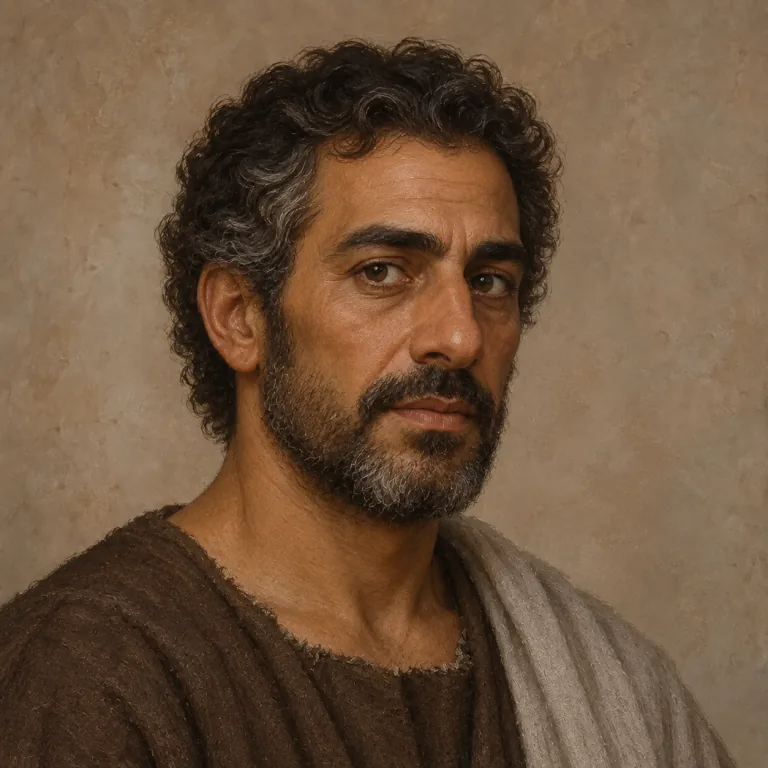
Portrait: an AI-generated artistic interpretation, not evidence of how Lot looked.
Who Lot is
Lot is Haran's son and Abram's nephew. He travels with the family from Ur to Haran and then with Abram into Canaan. After their return from Egypt, large holdings and quarrelling herdsmen lead them to separate. Lot chooses the well-watered Jordan plain and settles toward Sodom; when war sweeps through the region, he is captured and Abram rescues him. In Genesis 19 Lot welcomes two angels into his house. A crowd demands the visitors for sexual assault; Lot offers his two daughters instead, and the visitors pull him inside and strike the attackers blind. His sons-in-law dismiss his warning of destruction. When he lingers, the angels take him, his wife and two daughters by the hand and bring them out. Lot obtains permission to shelter in Zoar instead of fleeing to the mountain. His wife looks back and becomes a pillar of salt. Later, afraid to remain in Zoar, he lives in a cave with his daughters. On successive nights they make him drunk and have sex with him while he is unaware, seeking offspring through their father. They bear Moab and Ben-ammi, named as ancestors of the Moabites and Ammonites. Genesis ends Lot's account there without narrating his death.
Cited passages: Genesis 11:27, Genesis 11:28, Genesis 11:29, Genesis 11:30, Genesis 11:31, Genesis 12:4, Genesis 12:5, Genesis 13:1, Genesis 13:5, Genesis 13:6, Genesis 13:7, Genesis 13:8, Genesis 13:9, Genesis 13:10, Genesis 13:11, Genesis 13:12, Genesis 13:13, Genesis 14:11, Genesis 14:12, Genesis 14:13, Genesis 14:14, Genesis 14:15, Genesis 14:16, Genesis 19:1, Genesis 19:2, Genesis 19:3, Genesis 19:4, Genesis 19:5, Genesis 19:6, Genesis 19:7, Genesis 19:8, Genesis 19:9, Genesis 19:10, Genesis 19:11, Genesis 19:12, Genesis 19:13, Genesis 19:14, Genesis 19:15, Genesis 19:16, Genesis 19:17, Genesis 19:18, Genesis 19:19, Genesis 19:20, Genesis 19:21, Genesis 19:22, Genesis 19:23, Genesis 19:24, Genesis 19:25, Genesis 19:26, Genesis 19:27, Genesis 19:28, Genesis 19:29, Genesis 19:30, Genesis 19:31, Genesis 19:32, Genesis 19:33, Genesis 19:34, Genesis 19:35, Genesis 19:36, Genesis 19:37, Genesis 19:38
Historical setting
Genesis gives Lot's relationship precisely as Haran's son and Abram's brother's son, although the KJV also calls him brother during the rescue account. Sitting at Sodom's gate does not by itself establish a named public office for him; the crowd calls him a sojourner who presumes to judge. His wife and daughters remain unnamed, and the references to sons-in-law do not provide a complete count of his children. The older daughter's claim that no man is available is her stated reason for the cave plan, not the narrator's declaration that every other human has died. The account expressly says Lot did not perceive the sexual acts; it does not describe his consent. Later references to the children of Lot in Deuteronomy 2 concern the Moabite and Ammonite peoples and their land. Psalm 83 also uses that ancestral designation in a list of nations opposing Israel. None places the individual Lot in those later conflicts.
Cited passages: Genesis 11:27, Genesis 12:5, Genesis 14:14, Genesis 19:1, Genesis 19:8, Genesis 19:9, Genesis 19:10, Genesis 19:11, Genesis 19:12, Genesis 19:13, Genesis 19:14, Genesis 19:15, Genesis 19:16, Genesis 19:21, Genesis 19:22, Genesis 19:23, Genesis 19:30, Genesis 19:31, Genesis 19:32, Genesis 19:33, Genesis 19:34, Genesis 19:35, Genesis 19:36, Genesis 19:37, Genesis 19:38, Deuteronomy 2:9, Deuteronomy 2:19, Psalms 83:5, Psalms 83:6, Psalms 83:7, Psalms 83:8
How the story is told
Lot's choice begins with a view of abundant water, but the narrator immediately warns of Sodom's wickedness and impending destruction. His separate household still depends on rescue: first Abram retrieves him from captivity; later the angels pull him from danger and lead him out while he delays. Genesis attributes that escape to the Lord's mercy and to God remembering Abraham. Lot's attempt to protect guests places his daughters in danger, and the final cave scene records a further violation within the surviving family. Later texts emphasize other aspects without removing these events. Luke 17 uses ordinary life in Lot's days, sudden destruction and the warning to remember his wife in Jesus' teaching about the Son of man. Second Peter 2 calls Lot righteous, distressed by the surrounding lawlessness, and uses his deliverance in an argument about judgment and rescue. That later description remains the letter's assessment alongside the morally troubling actions Genesis actually narrates.
Cited passages: Genesis 13:10, Genesis 13:11, Genesis 13:12, Genesis 13:13, Genesis 14:14, Genesis 14:15, Genesis 14:16, Genesis 19:8, Genesis 19:9, Genesis 19:10, Genesis 19:11, Genesis 19:15, Genesis 19:16, Genesis 19:29, Genesis 19:30, Genesis 19:31, Genesis 19:32, Genesis 19:33, Genesis 19:34, Genesis 19:35, Genesis 19:36, Genesis 19:37, Genesis 19:38, Luke 17:28, Luke 17:29, Luke 17:30, Luke 17:31, Luke 17:32, Luke 17:33, 2 Peter 2:6, 2 Peter 2:7, 2 Peter 2:8, 2 Peter 2:9
Story moments
- The well-watered plain (Genesis 13:10). Lot sees the Jordan plain's abundance before choosing it as his new place to live.
- Rescued from captivity (Genesis 14:16). Abram brings back Lot, his goods and the other captives after pursuing the victorious kings.
- His daughters are offered to the crowd (Genesis 19:8). Lot's attempt to shield his guests explicitly exposes his daughters to the crowd's violence.
- Taken by the hand (Genesis 19:16). The angels lead the lingering Lot and his household out, with the rescue attributed to the Lord's mercy.
- A refuge he asks for (Genesis 19:22). Lot is urged to reach Zoar, the smaller city he has requested as a place of escape.
- The family line continues through violence (Genesis 19:36). Both daughters become pregnant by their father after the two nights in which he is described as unaware.
Key passages
Genesis 11:27
Now these are the generations of Terah: Terah begat Abram, Nahor, and Haran; and Haran begat Lot.
Genesis 11:31
And Terah took Abram his son, and Lot the son of Haran his son’s son, and Sarai his daughter in law, his son Abram’s wife; and they went forth with them from Ur of the Chaldees, to go into the land of Canaan; and they came unto Haran, and dwelt there.
Genesis 12:4
So Abram departed, as the Lord had spoken unto him; and Lot went with him: and Abram was seventy and five years old when he departed out of Haran.
Genesis 12:5
And Abram took Sarai his wife, and Lot his brother’s son, and all their substance that they had gathered, and the souls that they had gotten in Haran; and they went forth to go into the land of Canaan; and into the land of Canaan they came.
Genesis 13:1
And Abram went up out of Egypt, he, and his wife, and all that he had, and Lot with him, into the south.
Genesis 13:5
And Lot also, which went with Abram, had flocks, and herds, and tents.
King James Version. 34 indexed passages in total.
For reflection
The rescue account includes Lot offering his daughters to protect his guests. How can you attend both to his need for mercy and to the danger his choice imposes on others?
Books Lot appears in
Related people
Names and references are adapted from STEPBible TIPNR. A person listed with a verse is named or indexed there; it does not mean they wrote or spoke it.