Person in the New Testament
Epaphras
Epaphras: the man Colosse learned from, and who prayed for it

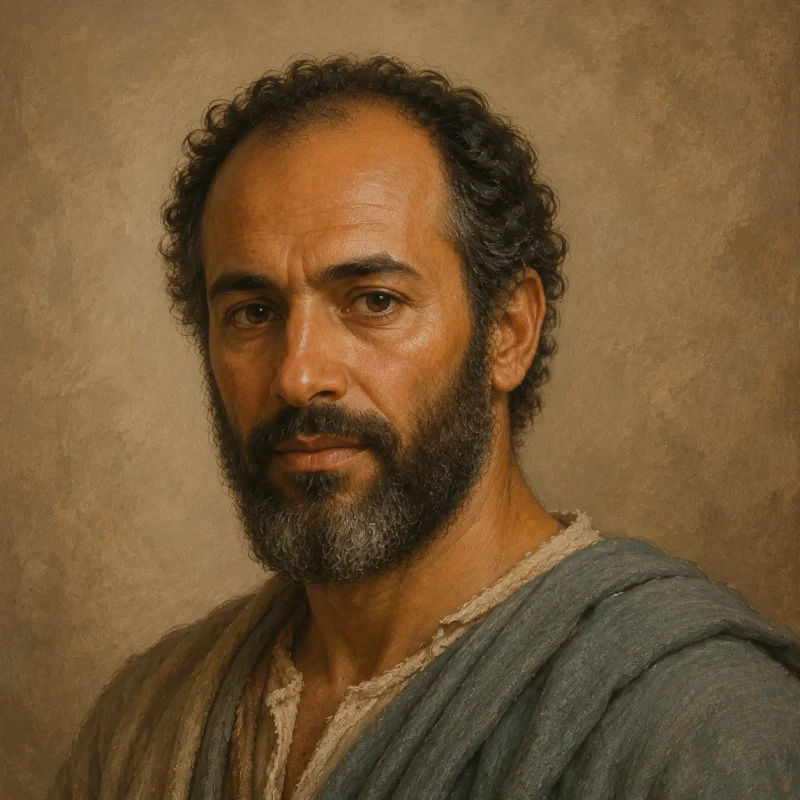
Portrait: an AI-generated artistic interpretation, not evidence of how Epaphras looked.
Who Epaphras is
Three verses name Epaphras. Colossians says the readers learned the gospel from him, calls him our dear fellowservant and says he is for you a faithful minister of Christ, and adds that he also declared unto us your love in the Spirit, so news travelled in both directions through him. Near the end of the same letter he sends greetings and is described as one of you, a servant of Christ, always labouring fervently for you in prayers, with the aim that the readers stand perfect and complete in all the will of God. Paul then adds his own testimony about him, that he hath a great zeal for you, and them that are in Laodicea, and them in Hierapolis, which extends his concern beyond one town. In Philemon he appears in a single line of greeting, called my fellowprisoner in Christ Jesus. That is the whole record: a teacher who brought the message to a town, a reporter who carried its news back, a man described as praying hard for three places, and a greeter named as a fellowprisoner.
Cited passages: Colossians 1:7, Colossians 1:8, Colossians 4:12, Colossians 4:13, Philemon 1:23, Colossians 1:4, Colossians 2:1
Historical setting
The letters do not identify Epaphras with Epaphroditus. They are named in different letters, described differently, and no verse connects them, so the two should be kept apart. Nothing is said about his family, his age, his trade or his death, and no words of his are quoted. Where he learned the gospel himself is not stated. The claim that he is my fellowprisoner in Christ Jesus is made once and is not explained, and nothing says where or for how long. Colossians calls him our dear fellowservant and one of you, and the only places attached to him are the readers' own town and the two named beside it, Laodicea and Hierapolis. The letter's own statement that many of its readers have not seen my face in the flesh sits beside the note that they learned of Epaphras, which is as close as the text comes to explaining how the message reached them.
Cited passages: Colossians 1:7, Colossians 4:12, Colossians 4:13, Philemon 1:23, Colossians 2:1
How the story is told
Epaphras is introduced in the thanksgiving, where a name in a prayer usually carries a purpose. By saying the readers learned of Epaphras, the letter credits its own information and its own standing with them to someone else, before it ever argues anything. At the other end of the letter he returns in the greetings, and the description has changed shape: the teacher has become a man labouring fervently for you in prayers, so he frames the letter at both ends, once as a source and once as an intercessor. The second description is unusually strenuous for a greeting list, and Paul reinforces it in his own voice, I bear him record, before naming two more towns. In Philemon the same man is reduced to one phrase in a line of names, my fellowprisoner in Christ Jesus.
Cited passages: Colossians 1:7, Colossians 1:8, Colossians 4:12, Colossians 4:13, Philemon 1:23
Story moments
- The one they learned from (Colossians 1:7). The readers received the gospel from Epaphras, not from Paul.
- He carried the news back (Colossians 1:8). He reported the readers' love in the Spirit to Paul.
- Labouring fervently in prayers (Colossians 4:12). His greeting comes with a description of hard praying for them.
- Zeal for three towns (Colossians 4:13). Paul adds his own testimony and names Laodicea and Hierapolis.
- Named a fellowprisoner (Philemon 1:23). A single line in another letter calls him a fellowprisoner in Christ Jesus.
Key passages
Colossians 1:7
As ye also learned of Epaphras our dear fellowservant, who is for you a faithful minister of Christ;
Colossians 4:12
Epaphras, who is one of you, a servant of Christ, saluteth you, always labouring fervently for you in prayers, that ye may stand perfect and complete in all the will of God.
Philemon 1:23
There salute thee Epaphras, my fellowprisoner in Christ Jesus;
King James Version. 3 indexed passages in total.
For reflection
Epaphras is described as labouring in prayer for people in three towns, and the text records no visit, no speech and no result. What would it mean to do work that nobody can see finish?
Books Epaphras appears in
Related people






Names and references are adapted from STEPBible TIPNR. A person listed with a verse is named or indexed there; it does not mean they wrote or spoke it.