Person in the New Testament
Philemon
Philemon: the host asked to receive Onesimus back

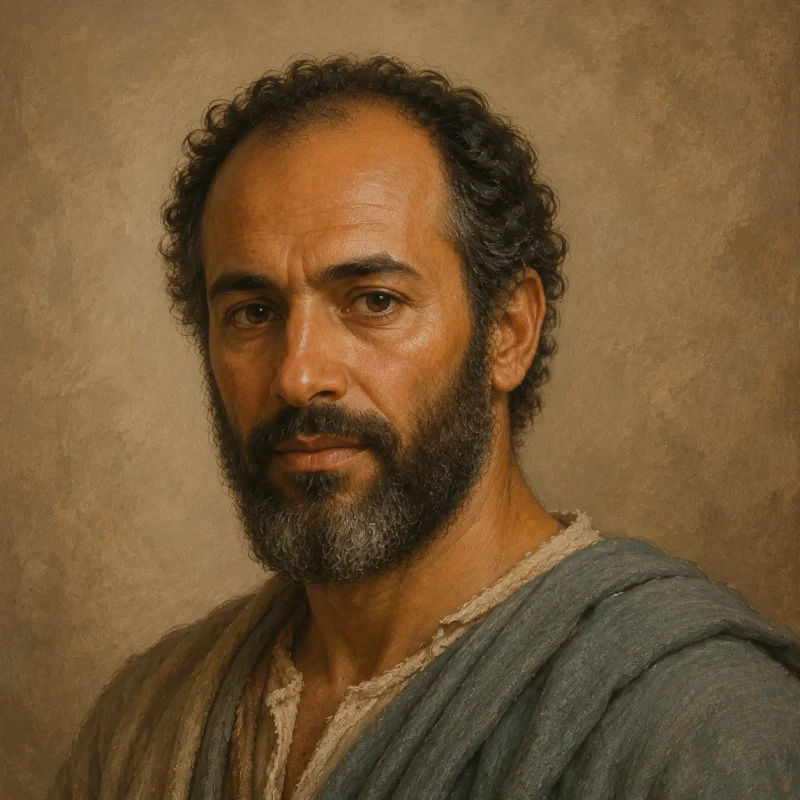
Portrait: an AI-generated artistic interpretation, not evidence of how Philemon looked.
Who Philemon is
Philemon is the man to whom the letter that carries his name is addressed. He is named first among the recipients, called our dearly beloved, and fellowlabourer, and the letter goes on to greet Apphia, Archippus our fellowsoldier, and the church in thy house. The writer says he thanks God and mentions him always in his prayers, having heard of his love and faith toward the Lord Jesus and toward all saints, and adds that the bowels of the saints are refreshed by thee. On that ground the request is made. The writer says he could be much bold in Christ to enjoin what is convenient, but beseeches instead, for Onesimus, whom he has sent again and asks Philemon to receive. He tells Philemon he would have kept Onesimus with him but would do nothing without his mind, so that the benefit should be willing. He asks that Onesimus be received not now as a servant, but above a servant, a brother beloved, and that if he counts the writer a partner he receive him as myself. Any wrong or debt is to be charged to the writer, who states it in his own handwriting and then reminds Philemon that he owes his own self besides. The letter asks for joy and refreshment from him, states confidence that he will do more than is asked, and asks him to prepare a lodging. What Philemon did is not recorded.
Cited passages: Philemon 1:1, Philemon 1:2, Philemon 1:4, Philemon 1:5, Philemon 1:7, Philemon 1:8, Philemon 1:9, Philemon 1:10, Philemon 1:12, Philemon 1:13, Philemon 1:14, Philemon 1:16, Philemon 1:17, Philemon 1:18, Philemon 1:19, Philemon 1:20, Philemon 1:21, Philemon 1:22
Historical setting
Everything the text gives about this man comes from one short letter. It establishes that a church meets in his house, that he is addressed alongside Apphia and Archippus, and that the writer calls him a fellowlabourer, but it never states how the three are related to each other, nor names a city, a household, a trade or an age. His connection to Onesimus is stated only through the request: Onesimus was away, is being sent back, and is to be received not now as a servant, but above a servant. The letter does not say why Onesimus left, whether he took anything, or what Philemon decided, and it phrases the possible wrong as a condition, If he hath wronged thee, or oweth thee ought. In this source the name occurs a second time in the line printed after the closing blessing, which says the letter was written from Rome to Philemon; that line is not one of the letter's own sentences, and the letter itself names no place.
Cited passages: Philemon 1:1, Philemon 1:2, Philemon 1:16, Philemon 1:18, Philemon 1:25
How the story is told
The letter presents him by praising him before asking him. The thanksgiving credits him with refreshing others, because the bowels of the saints are refreshed by thee, and the request later asks for the same thing in the same words, refresh my bowels in the Lord, so the appeal is built out of his own reputation. Authority is raised and then dropped in his hearing, though I might be much bold in Christ to enjoin thee that which is convenient, Yet for love's sake I rather beseech thee. He is addressed as one man, but the letter greets a household and a church with him, and its closing blessing turns to the plural, be with your spirit, so a private decision is put in front of witnesses. The last pressure is confidence rather than command, knowing that thou wilt also do more than I say, and the letter gives him no recorded reply.
Cited passages: Philemon 1:2, Philemon 1:7, Philemon 1:8, Philemon 1:9, Philemon 1:20, Philemon 1:21, Philemon 1:22, Philemon 1:25
Story moments
- Named and greeted (Philemon 1:1). Philemon is addressed as dearly beloved and fellowlabourer.
- A church in his house (Philemon 1:2). The letter greets a church meeting in his house.
- Known for refreshing others (Philemon 1:7). The writer says the saints are refreshed by him.
- Asked, not ordered (Philemon 1:9). The writer says he would rather beseech than enjoin.
- Receive him as myself (Philemon 1:17). Philemon is asked to receive Onesimus as he would the writer.
- The debt transferred (Philemon 1:19). The writer promises in his own hand to repay any wrong.
- Prepare a lodging (Philemon 1:22). Philemon is asked to expect a visit.
Key passages
Philemon 1:1
Paul, a prisoner of Jesus Christ, and Timothy our brother, unto Philemon our dearly beloved, and fellowlabourer,
Philemon 1:25
The grace of our Lord Jesus Christ be with your spirit. Amen.
Printed after this letter in the King James Version: Written from Rome to Philemon, by Onesimus a servant.
King James Version. 2 indexed passages in total.
For reflection
Philemon is praised for refreshing others, then asked to do for one man what he is already known for. How does public praise change a request made in front of a whole household?
Books Philemon appears in
Related people



Names and references are adapted from STEPBible TIPNR. A person listed with a verse is named or indexed there; it does not mean they wrote or spoke it.