Person in the Old Testament
Obadiah
Obadiah: a name attached to one vision and nothing more
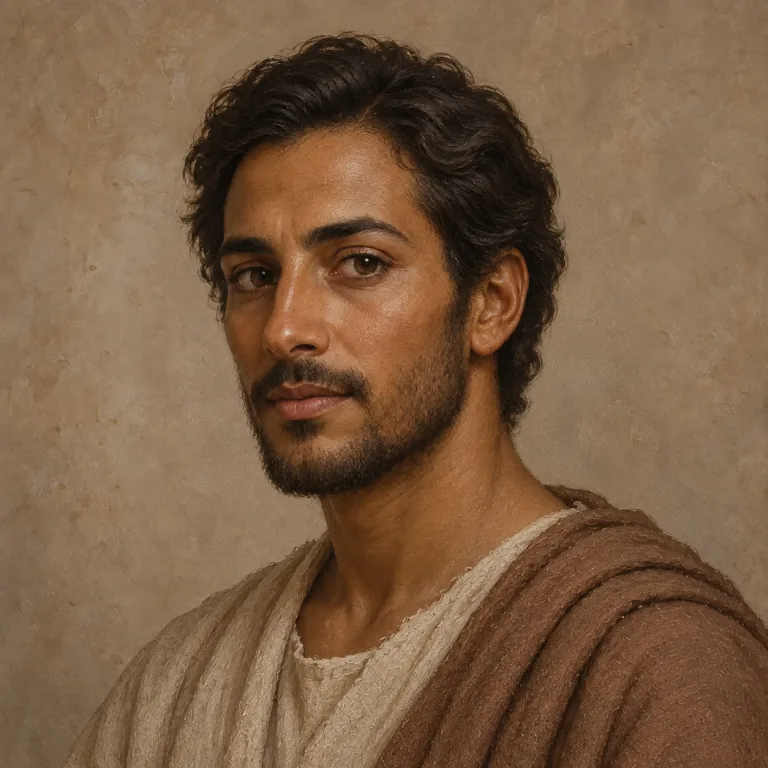
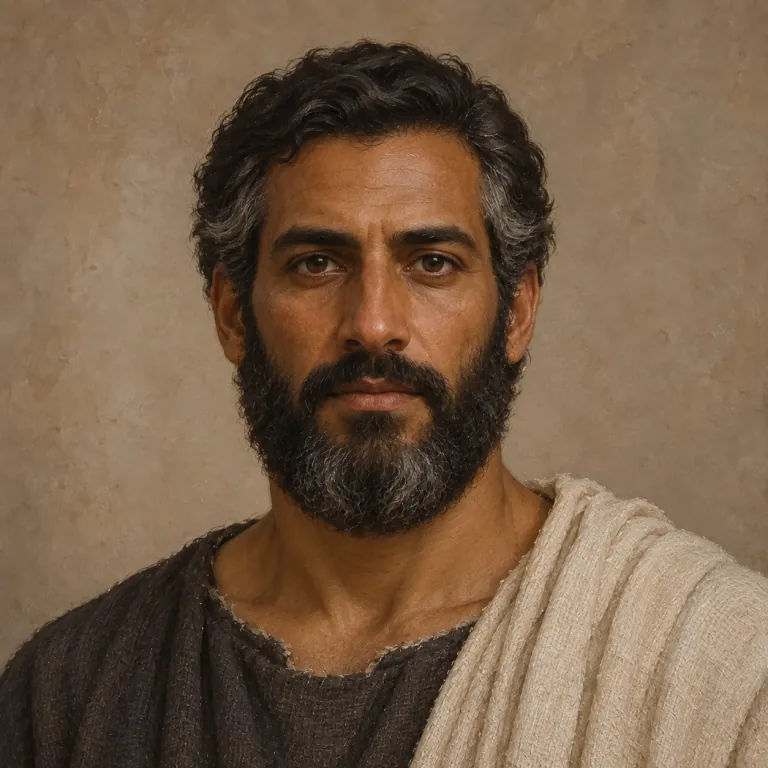
Portrait: an AI-generated artistic interpretation, not evidence of how Obadiah looked.
Who Obadiah is
Everything the text gives about this man is four words: "The vision of Obadiah." The same verse turns at once to its subject, "Thus saith the Lord God concerning Edom," and he is not mentioned again in any of the twenty remaining verses. No father, town, tribe, king, year or occupation is attached to him. Nothing he did is reported, nothing is said about how the vision came to him, and no one speaks to him or about him. What the book contains instead is the oracle itself: Edom brought down from the clefts of the rock, her confederates turning on her, the charge of "thy violence against thy brother Jacob," the day when strangers cast lots upon Jerusalem and "even thou wast as one of them," the reversal "as thou hast done, it shall be done unto thee," and the closing promise that "saviours shall come up on mount Zion to judge the mount of Esau; and the kingdom shall be the Lord’s." The name at the top is the only trace of the man in the whole book.
Cited passages: Obadiah 1:1, Obadiah 1:3, Obadiah 1:4, Obadiah 1:7, Obadiah 1:10, Obadiah 1:11, Obadiah 1:15, Obadiah 1:21
Historical setting
One verse is the entire record, so almost every ordinary question has the same answer: the text does not say. It does not date him, place him, name his father, give him an office or call him a prophet. Several other men in the Bible carry the name and are separate people here, among them Ahab's household officer, "Obadiah, which was the governor of his house," who "took an hundred prophets, and hid them by fifty in a cave," and a man in a returning company, "Obadiah the son of Jehiel." Nothing in "The vision of Obadiah" links him to any of them, and this record covers only the man of that first verse. The events the oracle describes are not dated either: the day at verse 11 has strangers carrying away forces and lots cast on Jerusalem, with no invader named and no year given, so it cannot be used to place him. Sepharad and Zarephath are named without location. Whether he ever spoke the vision aloud, and to whom, is not recorded.
Cited passages: Obadiah 1:1, 1 Kings 18:3, 1 Kings 18:4, Ezra 8:9, Obadiah 1:11, Obadiah 1:20
How the story is told
The opening line does two things and then drops the man. It gives a name and a source, "The vision of Obadiah. Thus saith the Lord God concerning Edom," and the voice immediately becomes plural and unassigned: "We have heard a rumour from the Lord, and an ambassador is sent among the heathen." From there the speech is the Lord's own, "Behold, I have made thee small among the heathen," and no first-person prophet is heard anywhere in the chapter. The book therefore reads as address rather than testimony, with a second person, "thou," kept in front of the reader throughout: thou that dwellest, thou shouldest not have looked, as thou hast done. Whatever weight the vision carries comes from its subject and its speaker, not from the man whose name stands over it.
Cited passages: Obadiah 1:1, Obadiah 1:2, Obadiah 1:3, Obadiah 1:12, Obadiah 1:15
Story moments
- The vision of Obadiah (Obadiah 1:1). The book's only mention of the man is the phrase naming the vision as his.
- Made small among the heathen (Obadiah 1:2). The Lord's own voice takes over at once and addresses Edom directly.
- Violence against thy brother (Obadiah 1:10). The charge against Edom is violence against her brother Jacob.
- As one of them (Obadiah 1:11). On the day lots were cast upon Jerusalem, Edom stood aside and counted as one of them.
- As thou hast done (Obadiah 1:15). The day of the Lord is near and Edom's deeds return on her own head.
- The kingdom shall be the Lord's (Obadiah 1:21). The book ends with saviours on mount Zion and the kingdom belonging to the Lord.
Key passages
Obadiah 1:1
The vision of Obadiah. Thus saith the Lord God concerning Edom; We have heard a rumour from the Lord, and an ambassador is sent among the heathen, Arise ye, and let us rise up against her in battle.
King James Version. 1 indexed passage in total.
For reflection
A single verse names him, and the book never returns to him. Does knowing nothing about the man change how the oracle against Edom reads?
Books Obadiah appears in
Related people
Names and references are adapted from STEPBible TIPNR. A person listed with a verse is named or indexed there; it does not mean they wrote or spoke it.