Person in the New Testament
Lois
Lois: the grandmother in whom the faith is said to have dwelt first
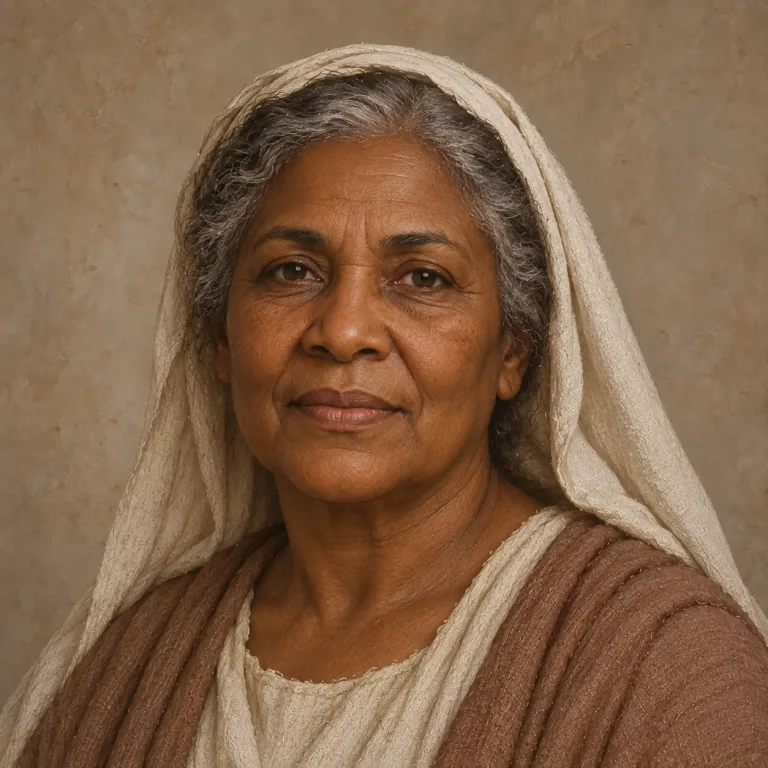
Portrait: an AI-generated artistic interpretation, not evidence of how Lois looked.
Who Lois is
Lois is named once. The writer of the second letter to Timothy says he calls to remembrance the unfeigned faith that is in thee, which dwelt first in thy grandmother Lois, and thy mother Eunice, and says he is persuaded that the same faith is in Timothy. Everything the text gives about her is contained in that clause: she is Timothy's grandmother, and she is the first of the three named as holding this faith. No scene involves her, no words are attributed to her, and no other passage in this source names her. The verses around her mention the writer's prayers night and day, his memory of Timothy's tears, and the gift of God in Timothy by the putting on of my hands, and none of them returns to her. Later in the letter the writer says Timothy has known the holy scriptures from a child, but he does not say who taught him.
Cited passages: 2 Timothy 1:5, 2 Timothy 1:3, 2 Timothy 1:4, 2 Timothy 1:6, 2 Timothy 3:15
Historical setting
A single verse is the whole record, so the limits are strict. The text states that she is Timothy's grandmother and that the faith dwelt first in her, and the word first sets an order among the three people named without giving any dates. It does not say whose mother she was, whether she was Eunice's mother or the mother of Timothy's father, whether she was still living, or where she lived. Acts speaks of Timothy as the son of a certain woman, which was a Jewess, and believed, and of a Greek father, but it names neither parent and says nothing at all about a grandmother, so nothing in this source joins that account to the name Lois.
Cited passages: 2 Timothy 1:5, Acts 16:1, Acts 16:3
How the story is told
She is used as a starting point in an argument rather than presented as a figure in a story. The sentence names three people in order and puts her at the head of it, which dwelt first in thy grandmother Lois, so the effect is to give Timothy something older than himself to stand on while the writer is urging him to stir up the gift of God. The naming is brief and specific, one name each with a relationship attached, and the letter does not pause on either woman. Elsewhere in this letter people are mostly named for something they did, those who left him and those who stayed with him; Lois is named for what was in her.
Cited passages: 2 Timothy 1:5, 2 Timothy 1:6, 2 Timothy 4:10, 2 Timothy 4:11
Story moments
- Named as grandmother (2 Timothy 1:5). The single verse naming Lois calls her Timothy's grandmother.
- Faith said to dwell first (2 Timothy 1:5). The writer places her at the head of a sequence of three.
- A reason to stir up the gift (2 Timothy 1:6). The memory is followed by a charge to Timothy.
- No grandmother in Acts (Acts 16:1). Acts mentions Timothy's parents but names no grandmother.
Key passages
2 Timothy 1:5
When I call to remembrance the unfeigned faith that is in thee, which dwelt first in thy grandmother Lois, and thy mother Eunice; and I am persuaded that in thee also.
King James Version. 1 indexed passage in total.
For reflection
The writer points back two generations to steady a man under pressure. What weight can a person carry from someone they may barely remember?
Books Lois appears in
Related people



Names and references are adapted from STEPBible TIPNR. A person listed with a verse is named or indexed there; it does not mean they wrote or spoke it.