Person in the New Testament
Eunice
Eunice: Timothy's mother, named in a single verse

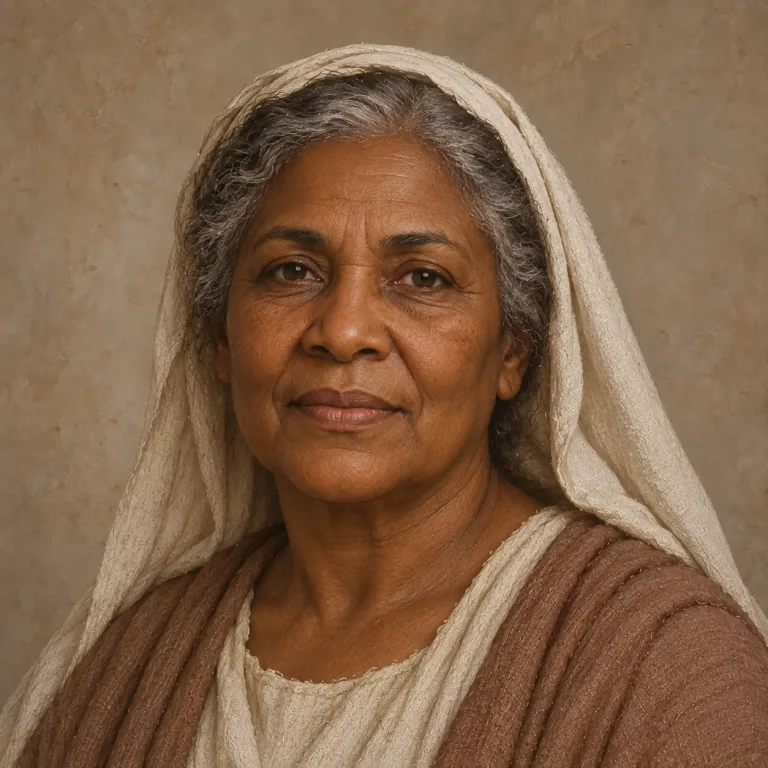
Portrait: an AI-generated artistic interpretation, not evidence of how Eunice looked.
Who Eunice is
Eunice is named once. In the second letter to Timothy the writer says he calls to remembrance the unfeigned faith that is in thee, which dwelt first in thy grandmother Lois, and thy mother Eunice, and adds that he is persuaded that it is in Timothy also. That single clause is all the text gives about her: she is Timothy's mother, and the faith the writer traces is said to have been in her before it was in her son. Nothing else in the passage describes her. The surrounding verses speak of the writer's own prayers night and day, of Timothy's tears, and of the gift of God in Timothy, but they say nothing further about Eunice. A later chapter of the same letter says that from a child thou hast known the holy scriptures, without naming who taught them to him.
Cited passages: 2 Timothy 1:5, 2 Timothy 1:3, 2 Timothy 1:4, 2 Timothy 1:6, 2 Timothy 3:15
Historical setting
One verse names her, and any account of her life beyond it would go past the evidence. The text states two things: that she is Timothy's mother, and that the unfeigned faith the writer speaks of dwelt first in Lois and in her. It does not say whether she was alive when the letter was written, where she lived, whether she was married, or what she taught. Acts describes Timothy as the son of a certain woman, which was a Jewess, and believed, and says his father was a Greek, but it does not give that woman a name, and no text in this source joins her to the name Eunice. The two passages should therefore be kept separate: one supplies a name without a background, the other a background without a name.
Cited passages: 2 Timothy 1:5, Acts 16:1, Acts 16:3
How the story is told
Her name appears inside a memory rather than a scene. The sentence moves through three people in one line, from thy grandmother Lois, and thy mother Eunice to Timothy himself, so she is a link in a sequence the writer is using to encourage the recipient, and the point of the sentence is the faith rather than the woman. She is identified only by her relation to the person being written to, and she is given no speech, no action and no place. The letter's later statement that Timothy has known the holy scriptures from a child leaves the teaching unattributed, so even the household detail that would fit her is not assigned to anyone.
Cited passages: 2 Timothy 1:5, 2 Timothy 3:15, 2 Timothy 1:6
Story moments
- Named as Timothy's mother (2 Timothy 1:5). The only verse that names Eunice calls her Timothy's mother.
- Faith traced through three (2 Timothy 1:5). The writer traces unfeigned faith from Lois to Eunice to Timothy.
- Scriptures known from a child (2 Timothy 3:15). The letter says Timothy knew the scriptures from childhood without naming a teacher.
- An unnamed mother in Acts (Acts 16:1). Acts describes Timothy's believing mother without giving her name.
Key passages
2 Timothy 1:5
When I call to remembrance the unfeigned faith that is in thee, which dwelt first in thy grandmother Lois, and thy mother Eunice; and I am persuaded that in thee also.
King James Version. 1 indexed passage in total.
For reflection
One clause is everything the text says about her. What do you do with a person whose whole record is that someone else's faith was in her first?
Books Eunice appears in
Related people


Names and references are adapted from STEPBible TIPNR. A person listed with a verse is named or indexed there; it does not mean they wrote or spoke it.