Person in the Old and New Testaments
Job
Job: the upright man of Uz who lost everything, argued with God and was restored
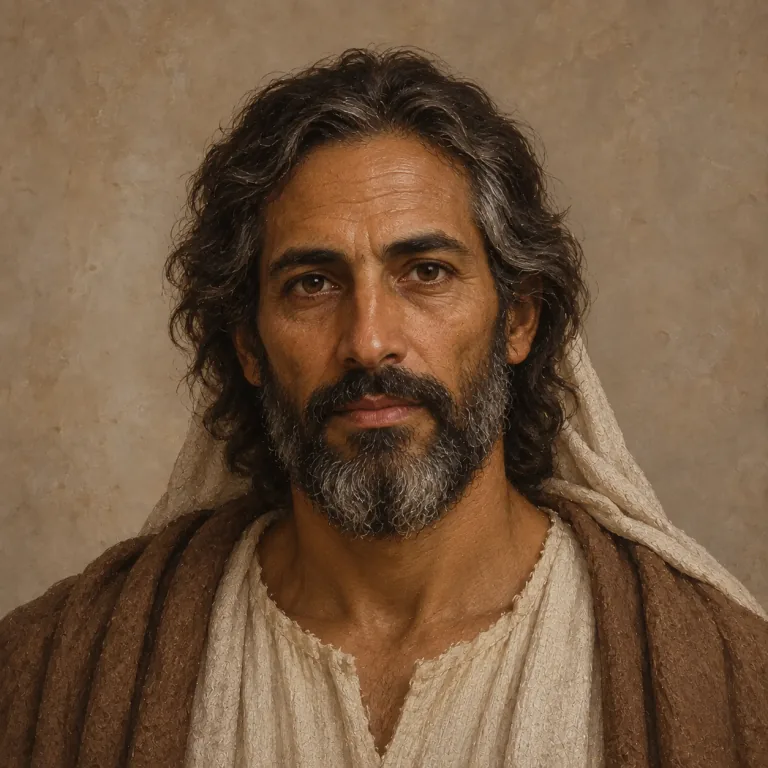
Portrait: an AI-generated artistic interpretation, not evidence of how Job looked.
Who Job is
Job is a man in the land of Uz, perfect and upright, one who fears God and eschews evil. He has seven sons and three daughters and large flocks, and is the greatest of the men of the east; he offers burnt offerings in case his children have sinned. In heaven the Lord points him out to Satan as "my servant Job," and Satan asks whether Job fears God for nothing. With the Lord's leave, Sabeans, fire from heaven, Chaldeans and a great wind take his animals, servants and all ten children in one day. Job rends his mantle, worships, and says the Lord gave and the Lord has taken away; the narrator says he does not sin. Satan then strikes him with boils from sole to crown; he sits among the ashes, and when his wife tells him to curse God and die, he refuses. Three friends sit with him seven days in silence. Then Job curses his day and answers each friend through the long dialogue until the narrator says his words are ended. In those speeches he holds fast his integrity, longs to find God and plead his cause, remembers his former honour, and swears an oath of innocence. Elihu's anger is kindled against him. The Lord answers him out of the whirlwind, and Job replies twice: first laying his hand on his mouth, then confessing that he spoke of what he did not understand, that his eye now sees God, and that he repents in dust and ashes. The Lord tells Eliphaz that Job has spoken rightly, has Job pray for the friends, turns his captivity, doubles his flocks and gives him seven sons and three daughters. Job lives a hundred and forty more years and dies old and full of days.
Cited passages: Job 1:1, Job 1:2, Job 1:3, Job 1:5, Job 1:8, Job 1:9, Job 1:12, Job 1:15, Job 1:19, Job 1:20, Job 1:21, Job 1:22, Job 2:7, Job 2:8, Job 2:9, Job 2:10, Job 2:13, Job 3:1, Job 6:1, Job 31:40, Job 27:5, Job 23:3, Job 29:2, Job 30:9, Job 31:6, Job 32:2, Job 38:1, Job 40:4, Job 42:5, Job 42:6, Job 42:7, Job 42:10, Job 42:13, Job 42:16, Job 42:17
Historical setting
The text places Job in "the land of Uz" and gives no other location, no date, no ancestry and no father's name. He is not described as an Israelite; the narrator calls him "the greatest of all the men of the east." The narrator describes him as perfect and upright, and the Lord repeats the same words to Satan twice, adding that Satan moved the Lord against him "without cause." The friends' charges of specific cruelty, stated by Eliphaz, are thus contradicted by the book's frame before they are made, and by the Lord's closing verdict that Job spoke what is right. Job's wife is not named, and his first ten children are not named; the three daughters born after his restoration are. His age is given only as a hundred and forty years lived after the restoration. Outside the book, the character packet indexes three verses. Ezekiel twice names "Noah, Daniel, and Job" as three men whose righteousness would deliver only their own souls. James writes, "Ye have heard of the patience of Job, and have seen the end of the Lord." The word "patience" does not occur in the book of Job itself; the handle's epithet comes from James. The book does not say how Job learned of the exchange between the Lord and Satan, or that he ever did.
Cited passages: Job 1:1, Job 1:3, Job 1:8, Job 2:3, Job 22:5, Job 42:7, Job 2:9, Job 42:14, Job 42:16, Ezekiel 14:14, Ezekiel 14:20, James 5:11
How the story is told
The book sets Job inside a frame. Narration at the start and end describes him from outside, and between them he speaks for himself, answering friends who never see what the reader has seen in heaven. That gap drives the book: Satan's question, whether Job fears God "for nought," is one Job never hears, and the friends argue a theory that the frame has already undercut. Job's own course runs from cursing his day, through the wish to find God's seat and argue, to an oath of innocence, then to a hand on his mouth and finally to seeing. Images turn over across the book. He sits in ashes at the start and repents in dust and ashes at the end; the princes once laid their hand on their mouth before him, and he lays his own hand on his mouth before God. The Lord says of him that "there is none like him in the earth," and later says of leviathan that "upon earth there is not his like." He offered burnt offerings for his children; at the end the friends offer them and he prays. Ezekiel names him among three men whose righteousness would deliver only themselves; James treats him as an example of endurance and of "the end of the Lord." Neither later text retells the dialogue; both take the frame.
Cited passages: Job 1:6, Job 1:9, Job 2:3, Job 3:1, Job 23:4, Job 31:35, Job 40:4, Job 42:5, Job 2:8, Job 42:6, Job 29:9, Job 1:8, Job 41:33, Job 1:5, Job 42:8, Ezekiel 14:14, James 5:11
Story moments
- A man in the land of Uz (Job 1:1). The narrator introduces Job as perfect and upright, fearing God and eschewing evil.
- The Lord gave and took away (Job 1:21). After losing flocks, servants and children in one day, Job worships.
- Good and evil from God's hand (Job 2:10). Covered in boils, Job refuses his wife's counsel to curse God and die.
- Job curses his day (Job 3:1). After seven silent days, Job opens his mouth and the dialogue begins.
- The words of Job are ended (Job 31:40). Job's oath of innocence closes his speeches before Elihu and the Lord speak.
- Now mine eye seeth thee (Job 42:5). Answering the Lord from the whirlwind, Job says he now sees God and repents.
- Captivity turned (Job 42:10). When Job prays for his friends, the Lord restores him with double.
Key passages
Job 1:1
There was a man in the land of Uz, whose name was Job; and that man was perfect and upright, and one that feared God, and eschewed evil.
Job 1:5
And it was so, when the days of their feasting were gone about, that Job sent and sanctified them, and rose up early in the morning, and offered burnt offerings according to the number of them all: for Job said, It may be that my sons have sinned, and cursed God in their hearts. Thus did Job continually.
Job 1:8
And the Lord said unto Satan, Hast thou considered my servant Job, that there is none like him in the earth, a perfect and an upright man, one that feareth God, and escheweth evil?
Job 1:9
Then Satan answered the Lord, and said, Doth Job fear God for nought?
Job 1:14
And there came a messenger unto Job, and said, The oxen were plowing, and the asses feeding beside them:
Job 1:20
Then Job arose, and rent his mantle, and shaved his head, and fell down upon the ground, and worshipped,
King James Version. 53 indexed passages in total.
For reflection
Satan asks whether Job fears God for nothing, and Job never hears the question. Reading his speeches with that question in mind, at what point, if any, does Job answer it?
Books Job appears in
Related people



Names and references are adapted from STEPBible TIPNR. A person listed with a verse is named or indexed there; it does not mean they wrote or spoke it.