Wisdom & Poetry · Old Testament
Job 1
Job 1: Job's integrity and the first losses
General context
The narrator introduces Job, a man in the land of Uz who is perfect and upright, fears God and avoids evil. He has seven sons, three daughters, large flocks and herds and a very great household, and is called the greatest of all the men of the east. His sons feast in turn and invite their sisters; after each round Job sanctifies them and offers burnt offerings in case they have sinned and cursed God in their hearts. On a day when the sons of God present themselves before the Lord, Satan comes among them. The Lord asks where he has been and points to Job as one with none like him in the earth. Satan asks whether Job fears God for nought, says the Lord has hedged him about, and claims that if the Lord touches all Job has, Job will curse him to his face. The Lord puts all that Job has into Satan's power but forbids touching Job himself. Four messengers arrive one after another: Sabeans take the oxen and asses and kill the servants; the fire of God burns the sheep and servants; Chaldeans in three bands carry off the camels and kill the servants; a great wind collapses the eldest brother's house where the sons and daughters are feasting, and the messenger says the young men are dead. Job tears his mantle, shaves his head, falls to the ground, worships, and says the Lord gave and the Lord has taken away. The narrator closes: in all this Job sinned not.
Cited passages: Job 1:1, Job 1:2, Job 1:3, Job 1:4, Job 1:5, Job 1:6, Job 1:8, Job 1:9, Job 1:10, Job 1:11, Job 1:12, Job 1:13, Job 1:15, Job 1:16, Job 1:17, Job 1:19, Job 1:20, Job 1:21, Job 1:22
Job 1 (KJV)
1There was a man in the land of Uz, whose name was Job; and that man was perfect and upright, and one that feared God, and eschewed evil.
2And there were born unto him seven sons and three daughters.
3His substance also was seven thousand sheep, and three thousand camels, and five hundred yoke of oxen, and five hundred she asses, and a very great household; so that this man was the greatest of all the men of the east.
4And his sons went and feasted in their houses, every one his day; and sent and called for their three sisters to eat and to drink with them.
5And it was so, when the days of their feasting were gone about, that Job sent and sanctified them, and rose up early in the morning, and offered burnt offerings according to the number of them all: for Job said, It may be that my sons have sinned, and cursed God in their hearts. Thus did Job continually.
6Now there was a day when the sons of God came to present themselves before the Lord, and Satan came also among them.
7And the Lord said unto Satan, Whence comest thou? Then Satan answered the Lord, and said, From going to and fro in the earth, and from walking up and down in it.
8And the Lord said unto Satan, Hast thou considered my servant Job, that there is none like him in the earth, a perfect and an upright man, one that feareth God, and escheweth evil?
9Then Satan answered the Lord, and said, Doth Job fear God for nought?
10Hast not thou made an hedge about him, and about his house, and about all that he hath on every side? thou hast blessed the work of his hands, and his substance is increased in the land.
11But put forth thine hand now, and touch all that he hath, and he will curse thee to thy face.
12And the Lord said unto Satan, Behold, all that he hath is in thy power; only upon himself put not forth thine hand. So Satan went forth from the presence of the Lord.
13And there was a day when his sons and his daughters were eating and drinking wine in their eldest brother’s house:
14And there came a messenger unto Job, and said, The oxen were plowing, and the asses feeding beside them:
15And the Sabeans fell upon them, and took them away; yea, they have slain the servants with the edge of the sword; and I only am escaped alone to tell thee.
16While he was yet speaking, there came also another, and said, The fire of God is fallen from heaven, and hath burned up the sheep, and the servants, and consumed them; and I only am escaped alone to tell thee.
17While he was yet speaking, there came also another, and said, The Chaldeans made out three bands, and fell upon the camels, and have carried them away, yea, and slain the servants with the edge of the sword; and I only am escaped alone to tell thee.
18While he was yet speaking, there came also another, and said, Thy sons and thy daughters were eating and drinking wine in their eldest brother’s house:
19And, behold, there came a great wind from the wilderness, and smote the four corners of the house, and it fell upon the young men, and they are dead; and I only am escaped alone to tell thee.
20Then Job arose, and rent his mantle, and shaved his head, and fell down upon the ground, and worshipped,
21And said, Naked came I out of my mother’s womb, and naked shall I return thither: the Lord gave, and the Lord hath taken away; blessed be the name of the Lord.
22In all this Job sinned not, nor charged God foolishly.
This page shows the King James Version. In the app, reading opens in the Berean Standard Bible unless you have chosen another translation. The reader includes five translations: the Berean Standard Bible (BSB), the King James Version (KJV), the World English Bible (WEB), the Bible in Basic English (BBE), and the American Standard Version (ASV). Search covers three of them: Berean Standard, King James, and World English. Basic English and American Standard readers search the King James words.
Historical context
The text names Job's home only as the land of Uz and gives no dates, no ancestry for Job, and no names for his wife or children. His standing is stated in numbers: seven sons, three daughters, seven thousand sheep, three thousand camels, five hundred yoke of oxen, five hundred she asses. The scene in verses 6 to 12 takes place before the Lord among the sons of God; Job is never shown to know of it, and the narrator does not say where it happens. Satan is the one who claims Job's piety depends on protection; the Lord calls Job perfect and upright, and the narrator says the same in verse 1. The four losses are reported by messengers, each of whom says he alone escaped; the narrator does not describe the raids independently. The Sabeans and Chaldeans are named as raiders without further identification, and the second messenger calls the fire the fire of God without the narrator confirming its source. The last messenger says the house fell upon the young men and they are dead; the sons and daughters were feasting there, and the text does not report the daughters separately. Servants are said to be slain with the edge of the sword. Whether the sons had in fact sinned is left open; Job's offerings rest on his own words, It may be.
Cited passages: Job 1:1, Job 1:3, Job 1:5, Job 1:6, Job 1:8, Job 1:9, Job 1:10, Job 1:15, Job 1:16, Job 1:17, Job 1:19, Job 1:22
Literary context
The chapter is built in three movements: the prose portrait of Job's prosperity and habit, the exchange in heaven, and the sequence of losses ending in Job's response. The description of Job in verse 1 is repeated almost word for word by the Lord in verse 8, so the reader hears Job's character twice before it is tested. Satan's question, Doth Job fear God for nought, sets the terms the rest of the book will test. The four reports share the same refrain, While he was yet speaking, and the same closing formula, I only am escaped alone to tell thee, which stacks the disasters without pause. The losses move from property to people and end with the children, whose feasting was mentioned first in verse 4 and again in verse 13. Job's own words balance giving and taking, and the narrator's verdict in verse 22 answers Satan's prediction in verse 11 that Job would curse God. The chapter withholds any explanation from Job himself.
Cited passages: Job 1:1, Job 1:8, Job 1:9, Job 1:11, Job 1:4, Job 1:13, Job 1:16, Job 1:17, Job 1:18, Job 1:19, Job 1:21, Job 1:22
Key moments
- Job introduced (Job 1:1). The narrator names Job as perfect, upright and God-fearing in the land of Uz.
- Offerings for his children (Job 1:5). Job sanctifies his children and offers burnt offerings in case they have sinned.
- Satan's question (Job 1:9). Satan asks whether Job fears God for nought.
- All he has in Satan's power (Job 1:12). The Lord grants Satan power over Job's possessions but not his body.
- Four messengers (Job 1:14). The first messenger arrives, and three more follow while each is still speaking.
- The children are dead (Job 1:19). A wind collapses the house where Job's sons and daughters are feasting, and the young men are dead.
- Job worships (Job 1:21). Job says the Lord gave and has taken away, and blesses the Lord's name.
For reflection
Satan asks whether Job fears God for nought, and the reader knows the wager Job does not. How does knowing more than Job change the way his worship in verse 21 reads?
People in this chapter
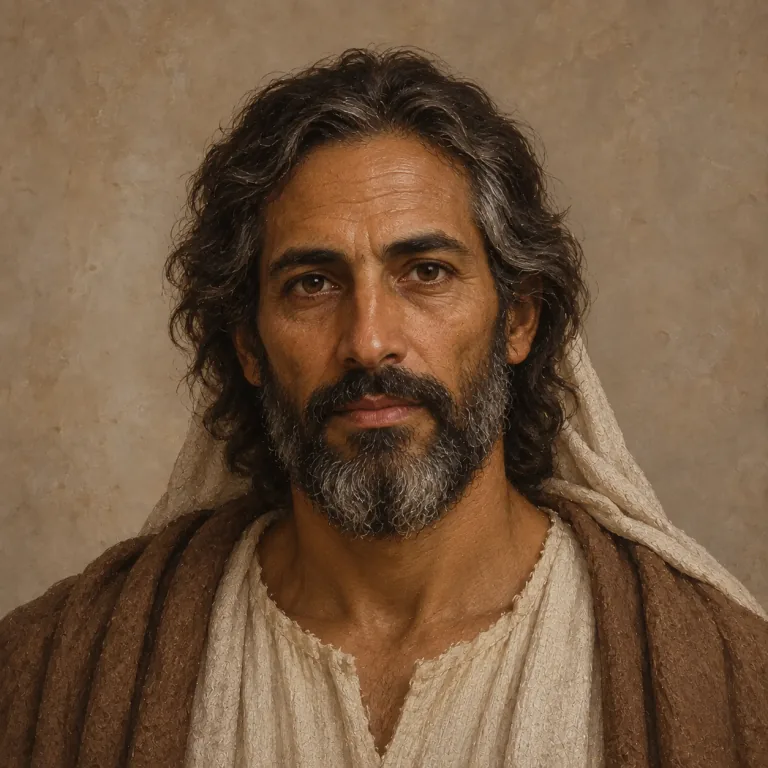
Also indexed here: