The Prophets · Old Testament
Ezekiel 24
Ezekiel 24: the boiling pot on the day of the siege and the death of the prophet's wife
General context
The heading reads "in the ninth year, in the tenth month, in the tenth day of the month," and the prophet is told to write the name of that day, for "the king of Babylon set himself against Jerusalem this same day." He is to utter a parable to the rebellious house: set on a pot, pour in water, fill it with choice pieces and bones and boil it. Then, "Woe to the bloody city, to the pot whose scum is therein," the pieces are to be brought out one by one with no lot cast. Her blood is set "upon the top of a rock," not covered with dust, so that fury may come up. The fire is heaped up to consume flesh and bones, then the empty pot is set on the coals so its scum may be consumed; her great scum did not go out. Because he purged her and she was not purged, she will not be purged until his fury rests on her; "I will not go back, neither will I spare, neither will I repent." A second word tells the prophet that the Lord will take away "the desire of thine eyes with a stroke," and he is not to mourn or weep, nor cover his lips, nor eat "the bread of men." He speaks to the people in the morning; "at even my wife died"; in the morning he does as commanded. When the people ask what this means for them, he answers that the Lord will profane his sanctuary, "the desire of your eyes," and their sons and daughters left behind will fall by the sword; they will do as he has done, "Thus Ezekiel is unto you a sign." When one who escapes comes with the news, the prophet's mouth will be opened and he will "be no more dumb," a sign to them, "and they shall know that I am the Lord."
Cited passages: Ezekiel 24:1, Ezekiel 24:2, Ezekiel 24:3, Ezekiel 24:4, Ezekiel 24:5, Ezekiel 24:6, Ezekiel 24:7, Ezekiel 24:8, Ezekiel 24:9, Ezekiel 24:10, Ezekiel 24:11, Ezekiel 24:12, Ezekiel 24:13, Ezekiel 24:14, Ezekiel 24:16, Ezekiel 24:17, Ezekiel 24:18, Ezekiel 24:19, Ezekiel 24:21, Ezekiel 24:22, Ezekiel 24:23, Ezekiel 24:24, Ezekiel 24:25, Ezekiel 24:26, Ezekiel 24:27
Ezekiel 24 (KJV)
1Again in the ninth year, in the tenth month, in the tenth day of the month, the word of the Lord came unto me, saying,
2Son of man, write thee the name of the day, even of this same day: the king of Babylon set himself against Jerusalem this same day.
3And utter a parable unto the rebellious house, and say unto them, Thus saith the Lord God; Set on a pot, set it on, and also pour water into it:
4Gather the pieces thereof into it, even every good piece, the thigh, and the shoulder; fill it with the choice bones.
5Take the choice of the flock, and burn also the bones under it, and make it boil well, and let them seethe the bones of it therein.
6Wherefore thus saith the Lord God; Woe to the bloody city, to the pot whose scum is therein, and whose scum is not gone out of it! bring it out piece by piece; let no lot fall upon it.
7For her blood is in the midst of her; she set it upon the top of a rock; she poured it not upon the ground, to cover it with dust;
8That it might cause fury to come up to take vengeance; I have set her blood upon the top of a rock, that it should not be covered.
9Therefore thus saith the Lord God; Woe to the bloody city! I will even make the pile for fire great.
10Heap on wood, kindle the fire, consume the flesh, and spice it well, and let the bones be burned.
11Then set it empty upon the coals thereof, that the brass of it may be hot, and may burn, and that the filthiness of it may be molten in it, that the scum of it may be consumed.
12She hath wearied herself with lies, and her great scum went not forth out of her: her scum shall be in the fire.
13In thy filthiness is lewdness: because I have purged thee, and thou wast not purged, thou shalt not be purged from thy filthiness any more, till I have caused my fury to rest upon thee.
14I the Lord have spoken it: it shall come to pass, and I will do it; I will not go back, neither will I spare, neither will I repent; according to thy ways, and according to thy doings, shall they judge thee, saith the Lord God.
15Also the word of the Lord came unto me, saying,
16Son of man, behold, I take away from thee the desire of thine eyes with a stroke: yet neither shalt thou mourn nor weep, neither shall thy tears run down.
17Forbear to cry, make no mourning for the dead, bind the tire of thine head upon thee, and put on thy shoes upon thy feet, and cover not thy lips, and eat not the bread of men.
18So I spake unto the people in the morning: and at even my wife died; and I did in the morning as I was commanded.
19And the people said unto me, Wilt thou not tell us what these things are to us, that thou doest so?
20Then I answered them, The word of the Lord came unto me, saying,
21Speak unto the house of Israel, Thus saith the Lord God; Behold, I will profane my sanctuary, the excellency of your strength, the desire of your eyes, and that which your soul pitieth; and your sons and your daughters whom ye have left shall fall by the sword.
22And ye shall do as I have done: ye shall not cover your lips, nor eat the bread of men.
23And your tires shall be upon your heads, and your shoes upon your feet: ye shall not mourn nor weep; but ye shall pine away for your iniquities, and mourn one toward another.
24Thus Ezekiel is unto you a sign: according to all that he hath done shall ye do: and when this cometh, ye shall know that I am the Lord God.
25Also, thou son of man, shall it not be in the day when I take from them their strength, the joy of their glory, the desire of their eyes, and that whereupon they set their minds, their sons and their daughters,
26That he that escapeth in that day shall come unto thee, to cause thee to hear it with thine ears?
27In that day shall thy mouth be opened to him which is escaped, and thou shalt speak, and be no more dumb: and thou shalt be a sign unto them; and they shall know that I am the Lord.
This page shows the King James Version. In the app, reading opens in the Berean Standard Bible unless you have chosen another translation. The reader includes five translations: the Berean Standard Bible (BSB), the King James Version (KJV), the World English Bible (WEB), the Bible in Basic English (BBE), and the American Standard Version (ASV). Search covers three of them: Berean Standard, King James, and World English. Basic English and American Standard readers search the King James words.
Historical context
This is the fourth chapter to open with a dated heading, "the ninth year, in the tenth month, in the tenth day," and the only one the text ties to an event on that same day: "the king of Babylon set himself against Jerusalem this same day." The day is to be written down, and the news is to reach the prophet later through "he that escapeth," who will let him "hear it with thine ears." The prophet's name is printed here inside the Lord's speech to the people, "Thus Ezekiel is unto you a sign"; the Lord otherwise addresses him as "son of man." His wife is named only as "the desire of thine eyes" and then in "my wife died"; her name and any cause beyond "a stroke" are not given, and the narrator records the death in one clause between two mornings. The mourning customs are known only by their negation: he is to bind his headdress, keep his shoes on, not cover his lips and not eat "the bread of men." The pot recalls the saying quoted in 11:3, "this city is the caldron, and we be the flesh," now with the Lord's own recipe. The blood "upon the top of a rock" is stated first as the city's act and then as the Lord's, "I have set her blood upon the top of a rock." The promise that his mouth will be opened and he will "be no more dumb" recalls 3:26, "that thou shalt be dumb," and the chapter does not report the escapee's arrival.
Cited passages: Ezekiel 24:1, Ezekiel 24:2, Ezekiel 24:26, Ezekiel 24:24, Ezekiel 24:25, Ezekiel 24:16, Ezekiel 24:18, Ezekiel 24:17, Ezekiel 11:3, Ezekiel 24:7, Ezekiel 24:8, Ezekiel 24:27, Ezekiel 3:26
Literary context
Two words of the Lord share one day. The first is a parable told as instructions in the imperative, "Set on a pot," "Gather the pieces," "Heap on wood," so the hearer cooks the city; then "Woe to the bloody city" is spoken twice, at 24:6 and 24:9, and the recipe turns into a burning, the flesh consumed, the bones burned, the empty pot scorched. "Scum" and "purged" are the repeated words, and the pot is finally judged for what it could not lose. The second word is a sign-act, and the text names it so, "Thus Ezekiel is unto you a sign," but here the sign is a death, and the narration is compressed: morning, evening, morning, with "my wife died" set between. The people's question, "Wilt thou not tell us what these things are to us," draws an answer that maps each forbidden gesture onto them, "ye shall do as I have done," line by line: tires, shoes, lips, bread. "The desire of thine eyes" is said of the wife and then "the desire of your eyes" of the sanctuary, binding the two losses in one phrase. The chapter ends on an opened mouth and the recognition formula, with the hearing still to come from an escapee.
Cited passages: Ezekiel 24:3, Ezekiel 24:4, Ezekiel 24:10, Ezekiel 24:6, Ezekiel 24:9, Ezekiel 24:11, Ezekiel 24:13, Ezekiel 24:24, Ezekiel 24:18, Ezekiel 24:19, Ezekiel 24:22, Ezekiel 24:23, Ezekiel 24:16, Ezekiel 24:21, Ezekiel 24:27
Key moments
- Write the name of the day (Ezekiel 24:2). The prophet is told to record the day the king of Babylon set himself against Jerusalem.
- Set on a pot (Ezekiel 24:3). The parable of the pot begins with water and choice pieces.
- Woe to the bloody city (Ezekiel 24:6). The pot with scum is the bloody city, its pieces brought out one by one.
- The desire of thine eyes (Ezekiel 24:16). The Lord announces he will take the prophet's wife with a stroke and forbids mourning.
- At even my wife died (Ezekiel 24:18). The prophet speaks in the morning, his wife dies at evening, and he obeys.
- Ezekiel is unto you a sign (Ezekiel 24:24). The people will lose sanctuary and children and do as the prophet has done.
- No more dumb (Ezekiel 24:27). When an escapee brings the news, the prophet's mouth will be opened.
For reflection
The prophet's wife dies at evening and he does in the morning as he was commanded, with no word of his own about her. What is the reader to make of a grief the text records but does not let him show?
People in this chapter
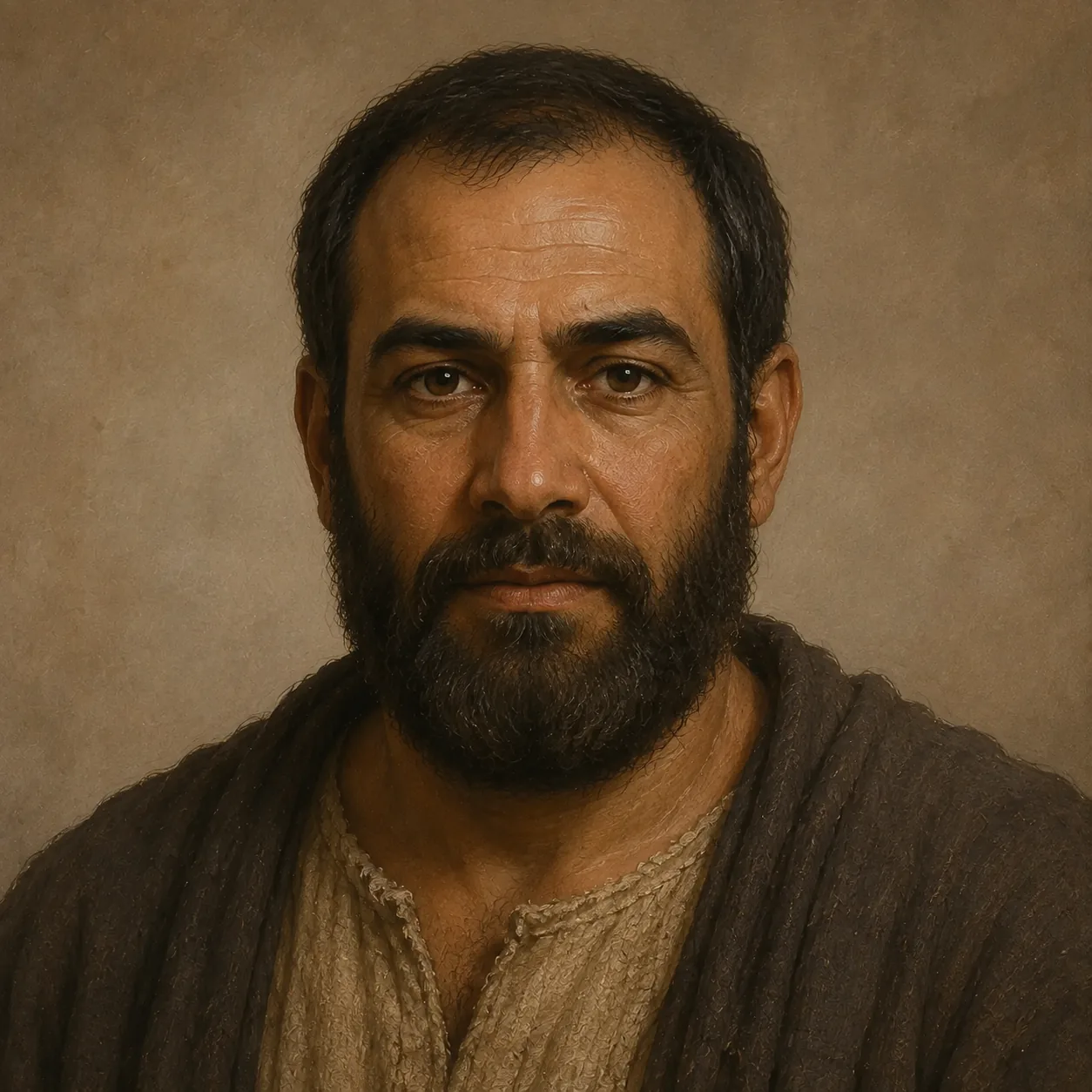

Also indexed here:
- A wife of Ezekiel