Person in the Old Testament
Ezekiel
Ezekiel: the priest among the captives by the river Chebar
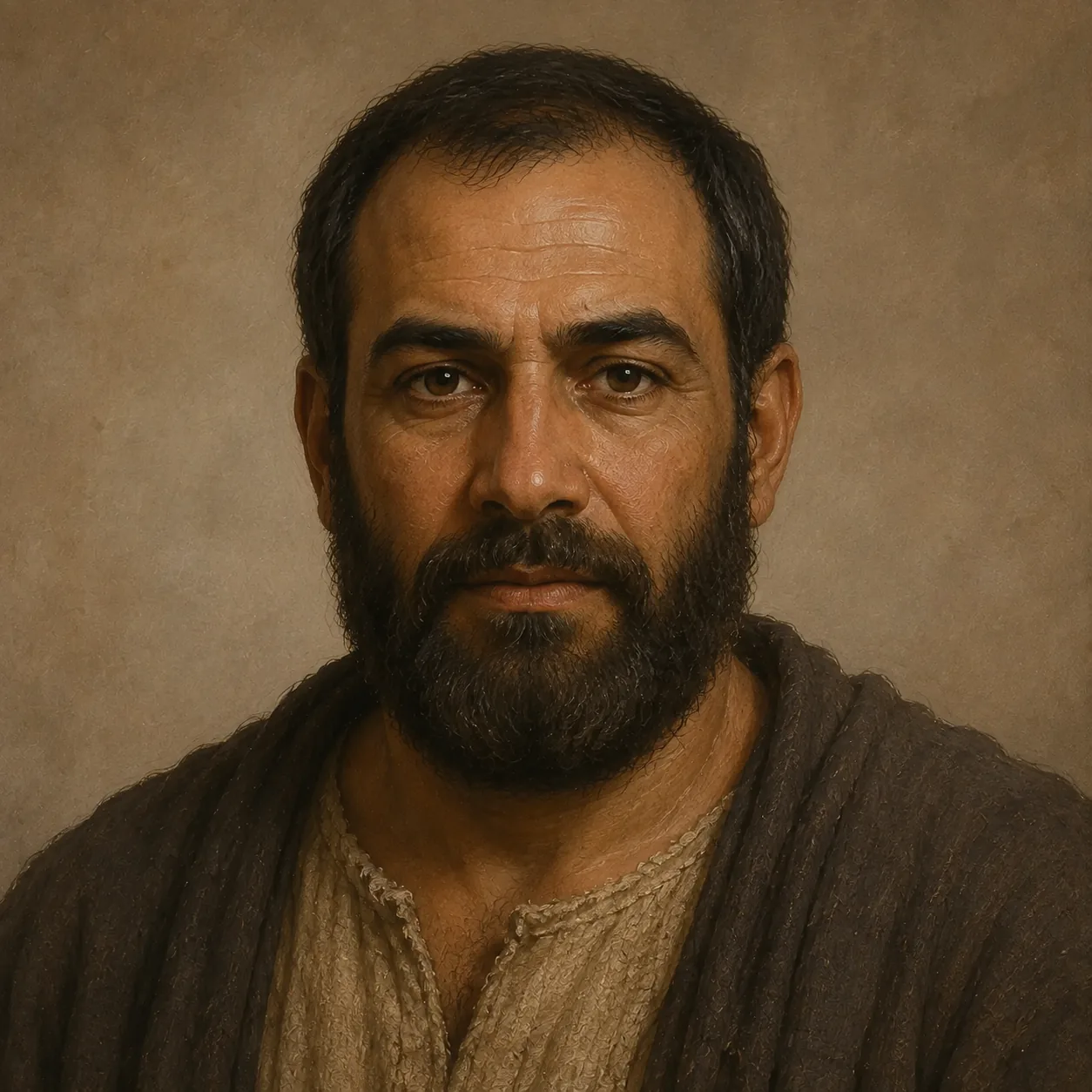
Portrait: an AI-generated artistic interpretation, not evidence of how Ezekiel looked.
Who Ezekiel is
The name Ezekiel is printed twice. The narrator says the word of the Lord came "expressly unto Ezekiel the priest, the son of Buzi, in the land of the Chaldeans by the river Chebar"; elsewhere the prophet speaks in the first person and is addressed as "Son of man". In the thirtieth year, the fifth year of king Jehoiachin's captivity, among the captives by the river of Chebar, the heavens open and he sees four living creatures, wheels full of eyes, a firmament and a throne, "the likeness of the glory of the Lord", and falls on his face. The spirit sets him on his feet, and he is sent to "a rebellious nation". He is given a roll of lamentations, mourning and woe, eats it and finds it sweet as honey. He goes "in bitterness" to the captives at Tel-abib, sits astonished seven days, is made a watchman to the house of Israel, and is told to shut himself in his house, bound with bands, dumb until the Lord opens his mouth. In the ninth year he is told to write the name of the day the king of Babylon set himself against Jerusalem. The Lord then says the desire of his eyes will be taken with a stroke and he is not to mourn or weep. He speaks to the people in the morning, and at evening his wife dies. The people ask what this means for them, and the word he reports is that they will do as he has done: "Thus Ezekiel is unto you a sign". In the twelfth year one escaped from Jerusalem comes saying the city is smitten; his mouth is opened. In the twenty-fifth year he is carried in visions to the land of Israel, shown the house and the returning glory, and falls on his face again.
Cited passages: Ezekiel 1:3, Ezekiel 2:1, Ezekiel 1:1, Ezekiel 1:2, Ezekiel 1:5, Ezekiel 1:18, Ezekiel 1:28, Ezekiel 2:2, Ezekiel 2:3, Ezekiel 2:10, Ezekiel 3:3, Ezekiel 3:14, Ezekiel 3:15, Ezekiel 3:17, Ezekiel 3:24, Ezekiel 3:25, Ezekiel 3:26, Ezekiel 3:27, Ezekiel 24:1, Ezekiel 24:2, Ezekiel 24:16, Ezekiel 24:18, Ezekiel 24:19, Ezekiel 24:24, Ezekiel 33:21, Ezekiel 33:22, Ezekiel 40:1, Ezekiel 40:2, Ezekiel 43:3, Ezekiel 1:22, Ezekiel 1:26
Historical setting
The book gives almost no biography, and what it gives should be listed exactly. He is "the priest, the son of Buzi"; no other relative is named, and his wife, who dies in chapter 24, is not named. His place is "the land of the Chaldeans by the river Chebar", among "the captives", at Tel-abib, and later "in mine house" where elders of Judah sit before him. No age is given; "the thirtieth year" in 1:1 is not said to be his age, and the next verse dates the same day by "the fifth year of king Jehoiachin’s captivity". The dated headings run from that fifth year through the sixth, seventh, ninth, tenth, eleventh and twelfth years to the twenty-fifth, with one heading in the twenty-seventh year standing out of order in chapter 29. Nothing is said of his birth, his death, or anything after the last vision. His dumbness is announced in 3:26, tied in 24:27 to the coming of an escaped man, and released in 33:22; between those points the text records him speaking oracles, including "So I spake unto the people in the morning" on the day his wife died, so the text does not present the silence as total, and it does not explain the tension. Apart from the date clause of 1:2, the third-person sentence at 1:3 is the only narrator statement about him; the rest is his own report. His name is printed in just those two places, 1:3 and 24:24, and the second is the Lord's word about him rather than narration.
Cited passages: Ezekiel 1:3, Ezekiel 24:18, Ezekiel 1:1, Ezekiel 3:15, Ezekiel 8:1, Ezekiel 1:2, Ezekiel 20:1, Ezekiel 24:1, Ezekiel 29:1, Ezekiel 26:1, Ezekiel 32:1, Ezekiel 40:1, Ezekiel 29:17, Ezekiel 3:26, Ezekiel 24:27, Ezekiel 33:22, Ezekiel 24:24
How the story is told
The book presents him through what he is shown and told far more than through what he feels. The voice calls him "Son of man" from the first speech onward, and his name is withheld from his own mouth; the narrator supplies it once, and the Lord uses it once when making him a sign. His feelings surface in a few phrases, "I fell upon my face", "in bitterness, in the heat of my spirit", "astonished among them seven days", and his replies are rare and short, "O Lord God, thou knowest" when he is asked whether dry bones can live, and four cries that begin "Ah Lord God!". His body is repeatedly made the message: he eats the roll, is bound and made dumb, and is forbidden to mourn his wife so that the people, seeing him, will know what they themselves will do. The refrain of his commission, "whether they will hear, or whether they will forbear", is answered later by "then shall they know that a prophet hath been among them", close to the words spoken at the start. The book is organised around his mouth, shut in chapter 3, promised open in chapter 24, opened in chapter 33 on the day the city's fall is reported, and the watchman charge is given twice, once at the commission and again in the chapter where the silence ends. His last act in the book is to be led and to look, the guide asking "hast thou seen this?", so that the prophet who began by seeing visions ends as a witness to measurements.
Cited passages: Ezekiel 2:1, Ezekiel 1:3, Ezekiel 24:24, Ezekiel 1:28, Ezekiel 3:14, Ezekiel 3:15, Ezekiel 37:3, Ezekiel 3:2, Ezekiel 24:22, Ezekiel 2:5, Ezekiel 33:33, Ezekiel 3:26, Ezekiel 33:22, Ezekiel 3:17, Ezekiel 33:7, Ezekiel 47:6, Ezekiel 4:14
Story moments
- Ezekiel the priest, son of Buzi (Ezekiel 1:3). The narrator names him once, a priest by the river Chebar in the land of the Chaldeans.
- He falls before the glory (Ezekiel 1:28). Seeing the likeness of the glory of the Lord, he falls on his face and hears a voice.
- Eating the roll (Ezekiel 3:3). He eats the roll of lamentations and finds it sweet as honey in his mouth.
- Made dumb in his house (Ezekiel 3:26). The Lord says his tongue will cleave to his mouth and he will be dumb until the Lord opens it.
- His wife dies at evening (Ezekiel 24:18). He speaks to the people in the morning, his wife dies at evening, and he does not mourn as commanded.
- Ezekiel is a sign (Ezekiel 24:24). The Lord's word names him a sign: the people will do as he has done.
- His mouth opened (Ezekiel 33:22). On the day the escaped man reports the city smitten, his mouth is opened and he is no more dumb.
Key passages
Ezekiel 1:3
The word of the Lord came expressly unto Ezekiel the priest, the son of Buzi, in the land of the Chaldeans by the river Chebar; and the hand of the Lord was there upon him.
Ezekiel 24:24
Thus Ezekiel is unto you a sign: according to all that he hath done shall ye do: and when this cometh, ye shall know that I am the Lord God.
King James Version. 2 indexed passages in total.
For reflection
He is told in the morning that the desire of his eyes will be taken, his wife dies that evening, and he is forbidden to mourn so that his stillness can be read as a sign. What does the text ask a reader to notice about a messenger whose own grief is turned into the message?
Books Ezekiel appears in
Related people

Names and references are adapted from STEPBible TIPNR. A person listed with a verse is named or indexed there; it does not mean they wrote or spoke it.