Person in the New Testament
Jairus
Jairus: the synagogue ruler who begged for his dying daughter
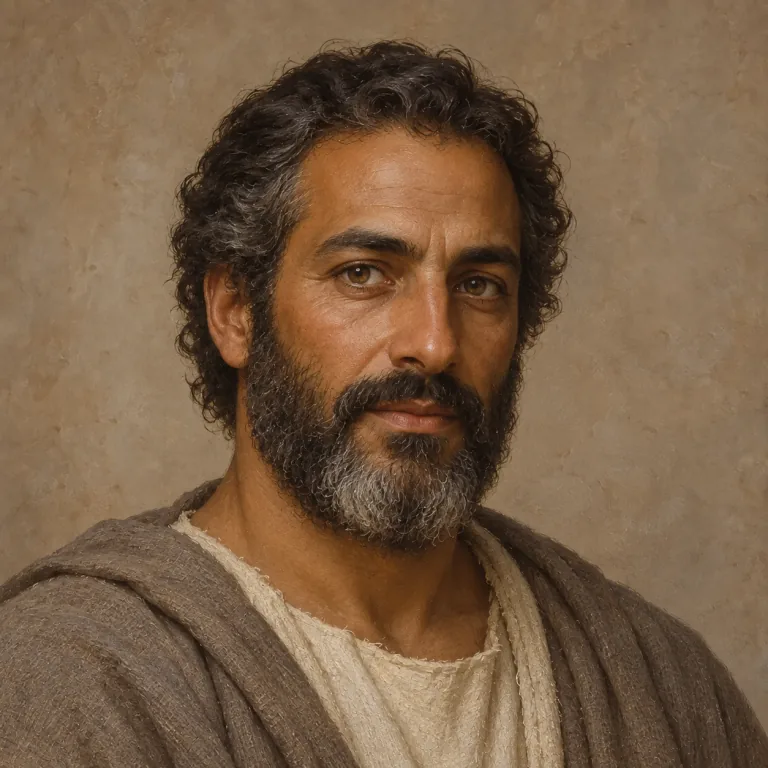
Portrait: an AI-generated artistic interpretation, not evidence of how Jairus looked.
Who Jairus is
Jairus is named in two passages, Mark and Luke, and both name him at the same moment. Mark calls him one of the rulers of the synagogue, says he fell at Jesus' feet and begged that his little daughter, at the point of death, be touched so that she might live. Luke calls him a ruler of the synagogue, says he fell down at Jesus' feet and besought him to come into his house, and adds that he had one only daughter, about twelve years of age, and that she lay dying. Jesus goes with him and the crowd presses in; a woman is healed on the way. While Jesus is still speaking, messengers come from the ruler's house to say the daughter is dead and that the Master need not be troubled further. Jesus tells him not to fear, only to believe. At the house there is weeping and wailing, and when Jesus says the child sleeps they laugh him to scorn. He puts them out, takes the father and the mother in with him, takes the child's hand and speaks, and she rises and walks. Both accounts end with a charge that no one be told and an order that she be given something to eat.
Cited passages: Mark 5:22, Mark 5:23, Mark 5:24, Mark 5:35, Mark 5:36, Mark 5:38, Mark 5:39, Mark 5:40, Mark 5:41, Mark 5:42, Mark 5:43, Luke 8:41, Luke 8:42, Luke 8:49, Luke 8:50, Luke 8:52, Luke 8:53, Luke 8:54, Luke 8:55, Luke 8:56
Historical setting
The name appears only in these two passages, and everything the text says about him belongs to one scene. Both call him a ruler of the synagogue, Mark as one of the rulers and Luke without that qualification. Luke states that the daughter was an only child and gives her age before the raising; Mark gives her age after she stands up. The mother is present at the raising but is not named, and no wife, house, town or later appearance is recorded for Jairus himself. Mark quotes his request directly; Luke reports it. The passages do not say what he said or did after the child rose, and they record no dates.
Cited passages: Mark 5:22, Mark 5:23, Mark 5:40, Mark 5:42, Luke 8:41, Luke 8:42, Luke 8:49, Luke 8:56
How the story is told
He is named once and then described by his office for the rest of the scene, so the text calls him the ruler of the synagogue when the messengers come and simply the father when the door closes. His one recorded speech is the request, and after the news of the death the text gives him no reply at all, to the messengers or to Jesus. The delay caused by the woman in the crowd is what allows the message to arrive, so his story is interrupted by another healing and resumed only after it. Both accounts set the mourners' laughter directly against the word that the child sleeps, and both close on an ordinary instruction about food.
Cited passages: Mark 5:22, Mark 5:23, Mark 5:24, Mark 5:35, Mark 5:36, Mark 5:39, Mark 5:40, Mark 5:43, Luke 8:49, Luke 8:52, Luke 8:53, Luke 8:55
Story moments
- He falls at his feet (Mark 5:22). A ruler of the synagogue named Jairus falls down before Jesus.
- The request (Mark 5:23). He asks that hands be laid on his dying little daughter so she may live.
- One only daughter (Luke 8:42). Luke says she was his only child, about twelve years old.
- The message of death (Mark 5:35). Word comes that the daughter is dead and the Master need not come.
- Only believe (Mark 5:36). Jesus tells him not to be afraid.
- The parents taken in (Mark 5:40). The mourners are put out and the father and mother go in with him.
- She rises and walks (Mark 5:42). The child gets up, and they are astonished.
Key passages
Mark 5:22
And, behold, there cometh one of the rulers of the synagogue, Jairus by name; and when he saw him, he fell at his feet,
Luke 8:41
And, behold, there came a man named Jairus, and he was a ruler of the synagogue: and he fell down at Jesus’ feet, and besought him that he would come into his house:
King James Version. 2 indexed passages in total.
For reflection
After the messengers say his daughter is dead, the text records nothing that Jairus says or does. What weight does that silence carry in a scene where everyone else is speaking?
Books Jairus appears in
Related people





Names and references are adapted from STEPBible TIPNR. A person listed with a verse is named or indexed there; it does not mean they wrote or spoke it.