Person in the Old Testament
Amos
Amos: the herdman of Tekoa who answered Amaziah at Beth-el
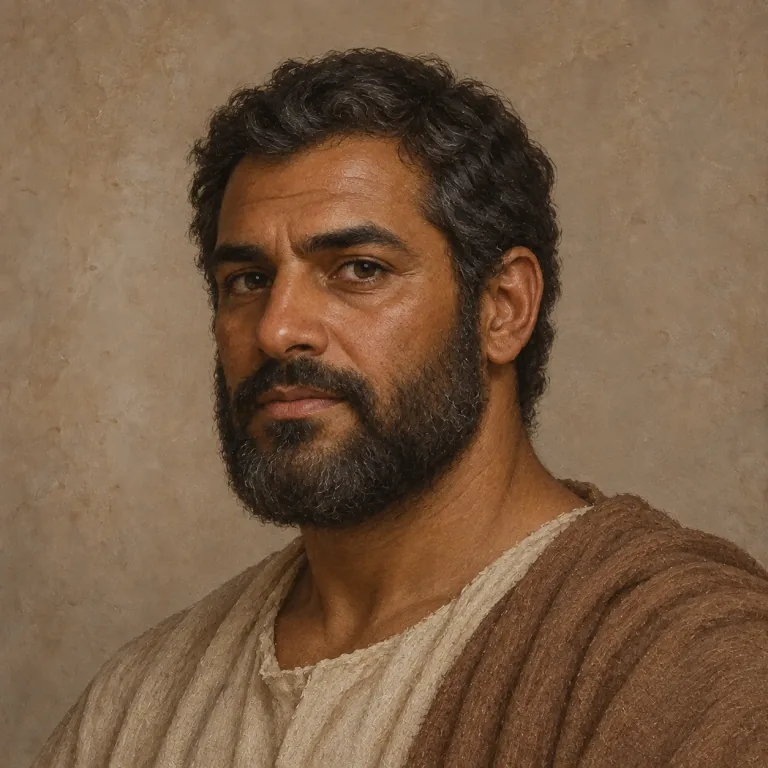
Portrait: an AI-generated artistic interpretation, not evidence of how Amos looked.
Who Amos is
The book opens with his name and his work: "The words of Amos, who was among the herdmen of Tekoa, which he saw concerning Israel in the days of Uzziah king of Judah, and in the days of Jeroboam the son of Joash king of Israel, two years before the earthquake." After that the name appears only in two vision exchanges and one confrontation. In the third vision the Lord asks him, "Amos, what seest thou?" and he answers, "A plumbline." Amaziah the priest of Beth-el then sends word to the king: "Amos hath conspired against thee in the midst of the house of Israel: the land is not able to bear all his words," reporting that Amos said Jeroboam would die by the sword. Amaziah tells him to earn his bread in Judah and "prophesy not again any more at Beth-el." Amos answers with the only account of himself in the book: "I was no prophet, neither was I a prophet’s son; but I was an herdman, and a gatherer of sycomore fruit," and "the Lord took me as I followed the flock, and the Lord said unto me, Go, prophesy unto my people Israel." He then speaks a sentence on Amaziah's household. In the fourth vision he is asked again, and answers, "A basket of summer fruit."
Cited passages: Amos 1:1, Amos 7:8, Amos 7:10, Amos 7:11, Amos 7:12, Amos 7:13, Amos 7:14, Amos 7:15, Amos 7:17, Amos 8:2
Historical setting
Amos is not Amoz. Isaiah's father is a different name in the printed text, "The vision of Isaiah the son of Amoz," and nothing in this book gives Amos a son or connects the two. What the text does give is work and place: "among the herdmen of Tekoa," and in his own words "an herdman, and a gatherer of sycomore fruit" taken by the Lord "as I followed the flock." Tekoa is named without any description. The handle "the Shepherd" is a product label; the printed text calls him a herdman and says he followed the flock, and never uses the word shepherd of him. Two kings fix the time, Uzziah of Judah and Jeroboam son of Joash of Israel, with "two years before the earthquake" as the only other marker, and the earthquake itself is never described. He denies the title prophet at 7:14 and is given the command "Go, prophesy" at 7:15, and Amaziah calls him "O thou seer." No father, wife, children, age or death is recorded.
Cited passages: Isaiah 1:1, Amos 1:1, Amos 7:14, Amos 7:15, Amos 7:12
How the story is told
The book names him where it needs a witness or a defendant, and nowhere else. In the visions his part is one word answered to a question: "A plumbline," then "A basket of summer fruit." Each time the Lord takes that word and makes it a sentence on Israel, so the man's whole contribution is to say what is in front of him. In the Beth-el scene he is talked about before he is talked to. Amaziah reports him to the king in the third person and sharpens the wording, then orders him out, and only then does Amos speak at length. His answer is a biography rather than an argument: not a claim to office, but a denial of one, followed by who took him and what he was told to do. After 8:2 his name does not appear again, and the last chapters carry no scene with him in it.
Cited passages: Amos 7:8, Amos 8:2, Amos 7:10, Amos 7:11, Amos 7:14, Amos 7:9
Story moments
- The words of Amos (Amos 1:1). The book opens naming Amos among the herdmen of Tekoa and the kings of his time.
- A plumbline (Amos 7:8). Asked what he sees, Amos names a plumbline and the Lord turns it into a sentence.
- Reported to the king (Amos 7:10). Amaziah the priest of Beth-el tells Jeroboam that Amos has conspired against him.
- Go, flee thee away (Amos 7:12). Amaziah orders Amos to earn his bread in Judah and stop prophesying at Beth-el.
- I was no prophet (Amos 7:14). Amos answers that he was a herdman and a gatherer of sycomore fruit.
- Taken from the flock (Amos 7:15). He says the Lord took him as he followed the flock and sent him to Israel.
- A basket of summer fruit (Amos 8:2). In the fourth showing he again names what he sees and hears the end announced.
Key passages
Amos 1:1
The words of Amos, who was among the herdmen of Tekoa, which he saw concerning Israel in the days of Uzziah king of Judah, and in the days of Jeroboam the son of Joash king of Israel, two years before the earthquake.
Amos 7:8
And the Lord said unto me, Amos, what seest thou? And I said, A plumbline. Then said the Lord, Behold, I will set a plumbline in the midst of my people Israel: I will not again pass by them any more:
Amos 7:10
Then Amaziah the priest of Beth-el sent to Jeroboam king of Israel, saying, Amos hath conspired against thee in the midst of the house of Israel: the land is not able to bear all his words.
Amos 7:11
For thus Amos saith, Jeroboam shall die by the sword, and Israel shall surely be led away captive out of their own land.
Amos 7:12
Also Amaziah said unto Amos, O thou seer, go, flee thee away into the land of Judah, and there eat bread, and prophesy there:
Amos 7:14
Then answered Amos, and said to Amaziah, I was no prophet, neither was I a prophet’s son; but I was an herdman, and a gatherer of sycomore fruit:
King James Version. 7 indexed passages in total.
For reflection
Ordered to leave, Amos answers by saying what he was before he was sent, a herdman taken from the flock. Why might that answer serve better here than a claim to the office Amaziah assumed he held?
Books Amos appears in
Related people
Names and references are adapted from STEPBible TIPNR. A person listed with a verse is named or indexed there; it does not mean they wrote or spoke it.