The Histories · Old Testament
2 Chronicles 4
2 Chronicles 4: the brasen altar, the sea and the vessels
General context
Solomon makes an altar of brass twenty cubits long, twenty broad and ten high, and a molten sea ten cubits from brim to brim, five high and thirty around, with two rows of cast oxen beneath its rim. The sea stands on twelve oxen, three facing each direction with their hinder parts inward; it is a handbreadth thick, its brim like a cup with lilies, and it holds three thousand baths. He makes ten lavers, five on each side, for washing what is offered, while the sea is for the priests to wash in. He makes ten gold candlesticks, ten tables and a hundred gold basons, the court of the priests, the great court and its brass-covered doors, and sets the sea at the right side of the east end toward the south. Huram makes the pots, shovels and basons and finishes his work: the two pillars with their pommels, chapiters and wreaths, four hundred pomegranates, bases and lavers, one sea and its twelve oxen, and the pots, shovels and fleshhooks of bright brass. The king casts them in the clay ground of the Jordan plain between Succoth and Zeredathah, in such quantity that the weight of the brass cannot be found out. Solomon then makes the vessels of gold: the golden altar, the shewbread tables, the candlesticks and lamps to burn before the oracle, flowers, lamps, tongs, snuffers, basons, spoons and censers, and the doors of the house, both to the most holy place and to the temple, of gold.
Cited passages: 2 Chronicles 4:1, 2 Chronicles 4:2, 2 Chronicles 4:3, 2 Chronicles 4:4, 2 Chronicles 4:5, 2 Chronicles 4:6, 2 Chronicles 4:7, 2 Chronicles 4:8, 2 Chronicles 4:9, 2 Chronicles 4:10, 2 Chronicles 4:11, 2 Chronicles 4:13, 2 Chronicles 4:15, 2 Chronicles 4:16, 2 Chronicles 4:17, 2 Chronicles 4:18, 2 Chronicles 4:19, 2 Chronicles 4:20, 2 Chronicles 4:22
2 Chronicles 4 (KJV)
1Moreover he made an altar of brass, twenty cubits the length thereof, and twenty cubits the breadth thereof, and ten cubits the height thereof.
2Also he made a molten sea of ten cubits from brim to brim, round in compass, and five cubits the height thereof; and a line of thirty cubits did compass it round about.
3And under it was the similitude of oxen, which did compass it round about: ten in a cubit, compassing the sea round about. Two rows of oxen were cast, when it was cast.
4It stood upon twelve oxen, three looking toward the north, and three looking toward the west, and three looking toward the south, and three looking toward the east: and the sea was set above upon them, and all their hinder parts were inward.
5And the thickness of it was an handbreadth, and the brim of it like the work of the brim of a cup, with flowers of lilies; and it received and held three thousand baths.
6He made also ten lavers, and put five on the right hand, and five on the left, to wash in them: such things as they offered for the burnt offering they washed in them; but the sea was for the priests to wash in.
7And he made ten candlesticks of gold according to their form, and set them in the temple, five on the right hand, and five on the left.
8He made also ten tables, and placed them in the temple, five on the right side, and five on the left. And he made an hundred basons of gold.
9Furthermore he made the court of the priests, and the great court, and doors for the court, and overlaid the doors of them with brass.
10And he set the sea on the right side of the east end, over against the south.
11And Huram made the pots, and the shovels, and the basons. And Huram finished the work that he was to make for king Solomon for the house of God;
12To wit, the two pillars, and the pommels, and the chapiters which were on the top of the two pillars, and the two wreaths to cover the two pommels of the chapiters which were on the top of the pillars;
13And four hundred pomegranates on the two wreaths; two rows of pomegranates on each wreath, to cover the two pommels of the chapiters which were upon the pillars.
14He made also bases, and lavers made he upon the bases;
15One sea, and twelve oxen under it.
16The pots also, and the shovels, and the fleshhooks, and all their instruments, did Huram his father make to king Solomon for the house of the Lord of bright brass.
17In the plain of Jordan did the king cast them, in the clay ground between Succoth and Zeredathah.
18Thus Solomon made all these vessels in great abundance: for the weight of the brass could not be found out.
19And Solomon made all the vessels that were for the house of God, the golden altar also, and the tables whereon the shewbread was set;
20Moreover the candlesticks with their lamps, that they should burn after the manner before the oracle, of pure gold;
21And the flowers, and the lamps, and the tongs, made he of gold, and that perfect gold;
22And the snuffers, and the basons, and the spoons, and the censers, of pure gold: and the entry of the house, the inner doors thereof for the most holy place, and the doors of the house of the temple, were of gold.
This page shows the King James Version. In the app, reading opens in the Berean Standard Bible unless you have chosen another translation. The reader includes five translations: the Berean Standard Bible (BSB), the King James Version (KJV), the World English Bible (WEB), the Bible in Basic English (BBE), and the American Standard Version (ASV). Search covers three of them: Berean Standard, King James, and World English. Basic English and American Standard readers search the King James words.
Historical context
Two makers are credited. The unnamed he of the opening verses continues the Solomon of the previous chapter, and the narrator later says Solomon made all these vessels and the gold vessels. Huram is named for the brass work, and one verse calls him Huram his father, matching the phrase of Huram my father's in Solomon's correspondence; the chapter does not explain the phrase, and it does not say whether this Huram is the king of Tyre or the craftsman he sent, though the work described is a craftsman's. The brass and gold lists are kept apart: Huram's items are of bright brass, Solomon's closing list is of pure gold. The chapter states distinct uses for the lavers, for washing what was offered, and the sea, for the priests to wash in. The casting site is given as the clay ground between Succoth and Zeredathah in the plain of Jordan, and the narrator says the weight of the brass could not be found out. The sea's capacity is three thousand baths. The chapter says ten candlesticks and ten tables without saying why ten, and it gives the pomegranates as four hundred on the two wreaths where the previous chapter gave a hundred on the chains.
Cited passages: 2 Chronicles 4:1, 2 Chronicles 4:18, 2 Chronicles 4:19, 2 Chronicles 4:11, 2 Chronicles 4:16, 2 Chronicles 2:13, 2 Chronicles 4:20, 2 Chronicles 4:6, 2 Chronicles 4:17, 2 Chronicles 4:5, 2 Chronicles 4:13, 2 Chronicles 3:16
Literary context
The chapter has three movements: measured objects (altar, sea, lavers, candlesticks, tables, courts), then a summary inventory under Huram's name, then a second inventory under Solomon's name. The phrase five on the right hand, and five on the left is repeated for lavers, candlesticks and tables, giving the furnishings a symmetrical rhythm. The sea receives the fullest treatment, and its oxen are described twice, first as cast rows beneath the rim and then as the twelve figures on which it stands. The text sets precise figures, cubits, a handbreadth, three thousand baths, beside the admission that the brass could not be weighed, so the reader is given exactness and then told where exactness ends. The word oracle links this chapter to the chains as in the oracle of the pillars and to the ark's later placement in the oracle of the house. The last words are of the doors, inner and outer, so the description ends at the point where a person would enter.
Cited passages: 2 Chronicles 4:6, 2 Chronicles 4:7, 2 Chronicles 4:8, 2 Chronicles 4:3, 2 Chronicles 4:4, 2 Chronicles 4:5, 2 Chronicles 4:18, 2 Chronicles 4:11, 2 Chronicles 4:19, 2 Chronicles 4:20, 2 Chronicles 3:16, 2 Chronicles 5:7, 2 Chronicles 4:22
Key moments
- The altar of brass (2 Chronicles 4:1). Solomon makes a brass altar twenty cubits square and ten high.
- The molten sea (2 Chronicles 4:2). A round sea ten cubits across and thirty around is cast.
- Twelve oxen beneath the sea (2 Chronicles 4:4). The sea stands on twelve oxen, three facing each direction.
- Lavers and the sea assigned (2 Chronicles 4:6). Ten lavers wash the offerings, while the sea is for the priests.
- Huram finishes his work (2 Chronicles 4:11). Huram completes the pots, shovels, basons and the rest of the brass work.
- Cast in the plain of Jordan (2 Chronicles 4:17). The king casts the brass in clay ground between Succoth and Zeredathah.
- Doors of gold (2 Chronicles 4:22). The inner doors to the most holy place and the temple doors are of gold.
For reflection
The narrator measures the sea to a handbreadth and counts its baths, then says the weight of the brass could not be found out. What does that pairing of exactness and a stated limit suggest about how this account wants the house to be seen?
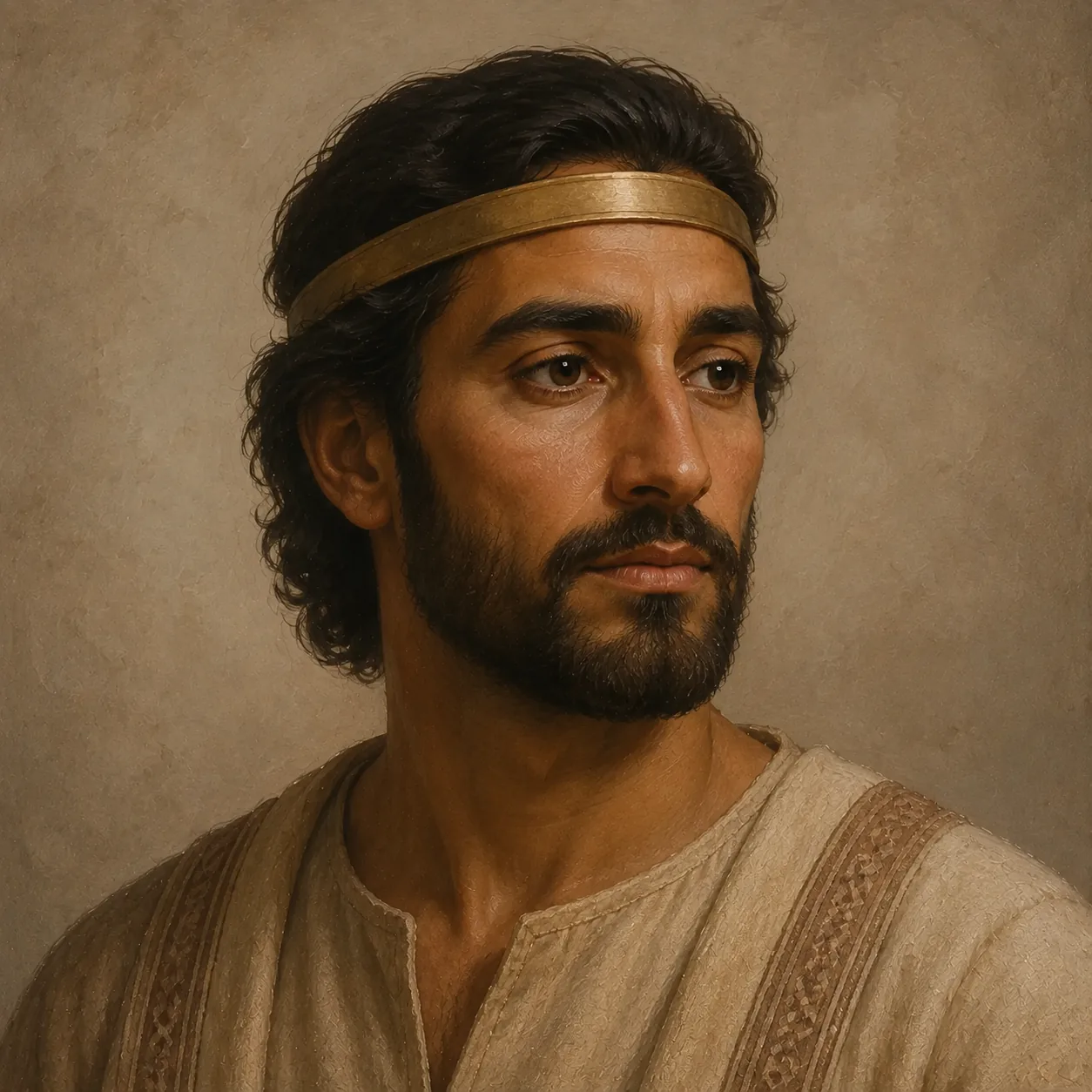
People in this chapter
Also indexed here: