Person in the Old Testament
Nahum in the Bible
Nahum the Elkoshite: named once, at the head of the vision of Nineveh
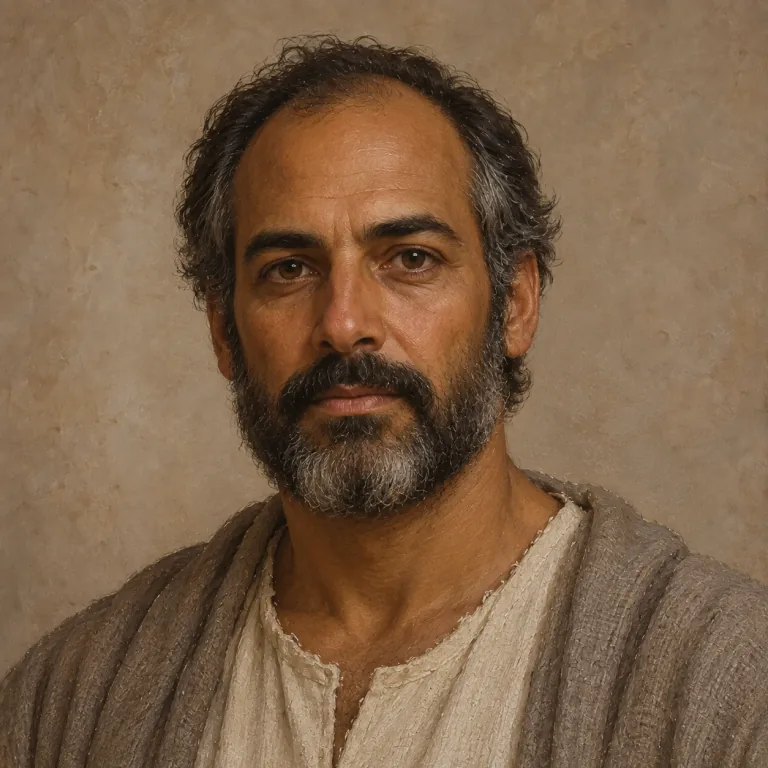
Portrait: an AI-generated artistic interpretation, not evidence of how Nahum looked.
Nahum at a glance
- First indexed passage
- Nahum 1:1
- Indexed passages
- 1 verse in 1 book
- Key passages
- Nahum 1:1
- Era
- The divided kingdom, about 930 to 586 BC
Passages come from the people index, adapted from STEPBible TIPNR. Dates are approximate and traditional. Scholars and traditions date these periods differently.
Who Nahum is
Nahum is named in a single verse: "The burden of Nineveh. The book of the vision of Nahum the Elkoshite." Nothing else in the book names him, and no scene shows him speaking, travelling or being answered. What follows that line is the vision itself, which turns at once to the Lord as jealous and avenging and then to the fall of a city. Everything a reader can say about Nahum from the text is contained in six words of description: the vision is his, and he is from Elkosh.
Historical setting
The text gives no father, no king, no date and no reign for Nahum, and no event of his life. "The Elkoshite" is the only thing said about his origin, and Elkosh is not described or located anywhere in the book. He is not called a prophet in this verse; the verse calls the work "The book of the vision of Nahum the Elkoshite." This source carries no superscriptions or headings, so there is no line above verse 1 to add anything, and no other verse of Nahum repeats his name. The book says nothing about how the vision came to him, who heard it, or what became of him.
Cited passages: Nahum 1:1, Nahum 1:2, Nahum 3:19
How the story is told
The one verse that holds his name does two jobs at once. It states the subject, "The burden of Nineveh," before it states the seer, so the city arrives before the man. It also names the writing itself as a book, which is unusual phrasing for an opening line and puts a made object between the reader and the visionary. After that the first person disappears almost entirely and the poem speaks of the Lord and of Nineveh directly, ending with a question asked of the city rather than a word from Nahum.
Cited passages: Nahum 1:1, Nahum 3:19
Story moments
- The book of the vision (Nahum 1:1). The opening verse names the burden of Nineveh and Nahum the Elkoshite.
- The Lord is jealous (Nahum 1:2). The vision headed by his name begins with the Lord as jealous and avenging.
- A closing question to the city (Nahum 3:19). The book ends by addressing Nineveh rather than returning to Nahum.
Key passages
Nahum 1:1
The burden of Nineveh. The book of the vision of Nahum the Elkoshite.
King James Version. 1 indexed passage in total.
For reflection
One verse, one place name, and then nothing more about the man. What difference does it make to read a book of hard judgment when its named seer stays completely out of view?
Questions about Nahum
Where is Nahum first mentioned in the Bible?
In the order of the Bible's books, the first passage indexed for Nahum is Nahum 1:1.
Which books of the Bible mention Nahum?
Nahum is indexed in one book, Nahum.
How many times is Nahum mentioned in the Bible?
The people index on Naravist, adapted from STEPBible TIPNR, lists 1 verse for Nahum. It counts verses, not every use of the name. An indexed name may also appear in a genealogy or refer to descendants.
When did Nahum live?
The timeline places Nahum in this era: The divided kingdom, about 930 to 586 BC. Dates are approximate and traditional. Scholars and traditions date these periods differently.
Books Nahum appears in
Related people

Names and references are adapted from STEPBible TIPNR. A person listed with a verse is named or indexed there; it does not mean they wrote or spoke it.