Person in the Old Testament
Habakkuk
Habakkuk the prophet: the burden he saw and the prayer upon Shigionoth
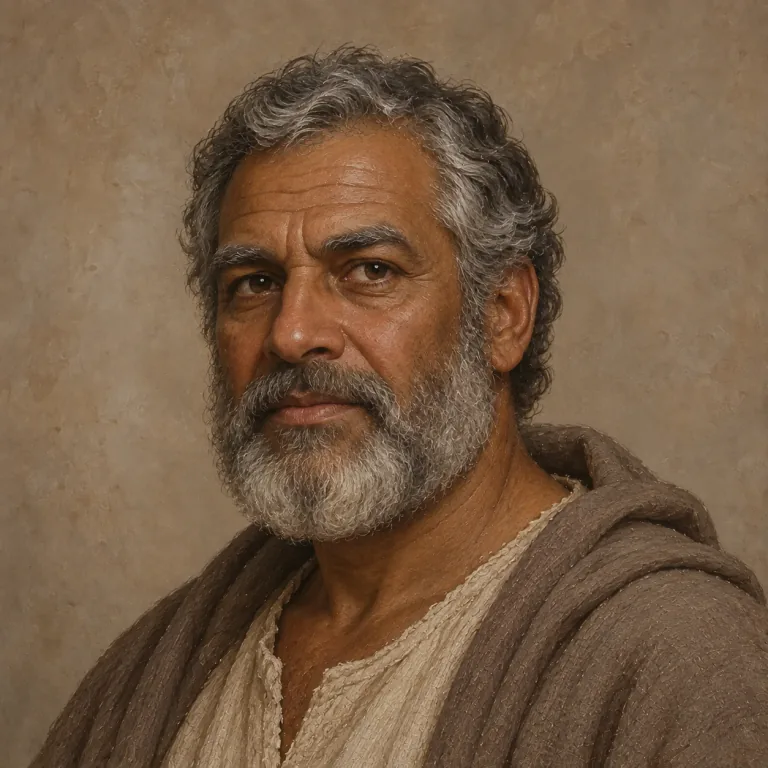
Portrait: an AI-generated artistic interpretation, not evidence of how Habakkuk looked.
Who Habakkuk is
Habakkuk is named twice, both times in a heading line printed as verse text. The book opens, "The burden which Habakkuk the prophet did see," and the last section opens, "A prayer of Habakkuk the prophet upon Shigionoth." Between those two lines the book is spoken largely in the first person, by a voice that complains of violence and waits for an answer, and that voice says, "I will stand upon my watch, and set me upon the tower, and will watch to see what he will say unto me, and what I shall answer when I am reproved." The closing prayer ends with strength and high places and a note for performance: "The Lord God is my strength, and he will make my feet like hinds’ feet, and he will make me to walk upon mine high places. To the chief singer on my stringed instruments." No narrative anywhere shows Habakkuk acting, travelling or meeting anyone.
Cited passages: Habakkuk 1:1, Habakkuk 3:1, Habakkuk 2:1, Habakkuk 3:19
Historical setting
The text gives Habakkuk no father, no town, no tribe and no king; there is no date anywhere in the book and no named ruler of Judah. His only title is "the prophet," used in both headings. Those headings are printed as ordinary verse text in this source, which carries no superscriptions or title lines, so nothing outside the verses identifies him. "Upon Shigionoth" and "To the chief singer on my stringed instruments" appear in the verse text without explanation; the text does not say what either means. The first person speaker of 2:1 who waits on the watch is not named in that verse; the connection to Habakkuk rests on the heading at 1:1 that calls the burden his. Nothing is recorded of his death, family or hearers.
Cited passages: Habakkuk 1:1, Habakkuk 3:1, Habakkuk 2:1, Habakkuk 3:19
How the story is told
He exists in the book as a voice rather than a figure. The two lines that name him bracket the whole: a burden seen at the start, a prayer sung at the end, so the book moves from sight to song under one name. The middle keeps him present only through pronouns, questioning, watching, waiting for a reply, and then reporting what he is told to write. The watchtower line is the closest the book comes to a scene, and it is a posture rather than an event: standing, setting himself, watching to see what will be said to him. The final verse ties the prayer to performance, which leaves the prophet as someone whose words are handed to a singer.
Cited passages: Habakkuk 1:1, Habakkuk 2:1, Habakkuk 3:1, Habakkuk 3:19
Story moments
- The burden he saw (Habakkuk 1:1). The book opens by naming the burden Habakkuk the prophet saw.
- Standing on the watch (Habakkuk 2:1). The speaker takes up a post to wait for an answer.
- A prayer upon Shigionoth (Habakkuk 3:1). A second heading names Habakkuk again and introduces his prayer.
- Hinds’ feet and stringed instruments (Habakkuk 3:19). The prayer ends with strength, high places and a note for the chief singer.
Key passages
Habakkuk 1:1
The burden which Habakkuk the prophet did see.
Habakkuk 3:1
A prayer of Habakkuk the prophet upon Shigionoth.
King James Version. 2 indexed passages in total.
For reflection
Habakkuk is given no father, town or date, only a burden he saw and a prayer he set to strings. What is lost, and what is gained, when a book keeps its questioner this anonymous?
Books Habakkuk appears in
Names and references are adapted from STEPBible TIPNR. A person listed with a verse is named or indexed there; it does not mean they wrote or spoke it.